Termites in Florida: Species, Seasons & Risks
Termites in Florida are active year-round. Learn which species live here, when they swarm, why Florida homes are at risk, and how to protect your property.
Think you have termites or bed bugs? Free survey & upfront quote from Randy Riesen.
Termites in Florida are a year-round problem. The state's warm, humid climate never gets cold enough to slow them down, and Florida is home to more termite species than almost any other state. The two that matter most to homeowners are drywood termites, which live inside the wood, and subterranean termites, which live in the soil.
Some experts say it isn't a question of if a Florida home will deal with termites, but when. That sounds alarming, but it's manageable once you know what you're up against. This guide covers the species, the seasons, the reasons Florida homes are so exposed, and what actually protects your property.
Why Florida has so many termites
Termites thrive where it's warm, humid, and full of wood. Florida checks every box.
- No hard winter. In colder states, termite activity slows down for months. Here, colonies keep feeding and growing all year.
- Humidity. Subterranean termites need moisture to survive, and Florida's air and soil supply plenty of it. Rain, irrigation, and leaky gutters add more.
- Ports and boats. Several of Florida's most destructive termites are invasive species that arrived by ship or boat and spread from coastal cities inland.
- Lots of wood in "block" homes. Even concrete-block homes have wood roof framing, trusses, door frames, trim, cabinets, and furniture. Drywood termites only need dry wood, and every Florida house has plenty.
- Long swarm seasons. Different species swarm at different times, so somewhere in Florida, some termite is swarming for much of the year.
The main termite species in Florida
Florida has dozens of termite species, but a handful cause almost all the damage to homes. If you want to know how to tell them apart by sight, see our Florida termite identification guide.
| Species | Type | Where in Florida | What it attacks |
|---|---|---|---|
| Drywood termites (southeastern and West Indian) | Drywood | Statewide, especially coastal and older homes | Attic framing, trim, window and door frames, furniture |
| Eastern subterranean | Subterranean | Statewide | Wood near or touching soil, slab edges, door frames |
| Formosan subterranean | Subterranean | Coastal cities and parts of Central Florida | Huge colonies that can damage a structure quickly |
| Asian subterranean | Subterranean | Mainly South Florida | Similar to Formosan, very aggressive |
| Conehead | Arboreal | Small area of South Florida | Trees, landscaping, and structures |
Drywood termites
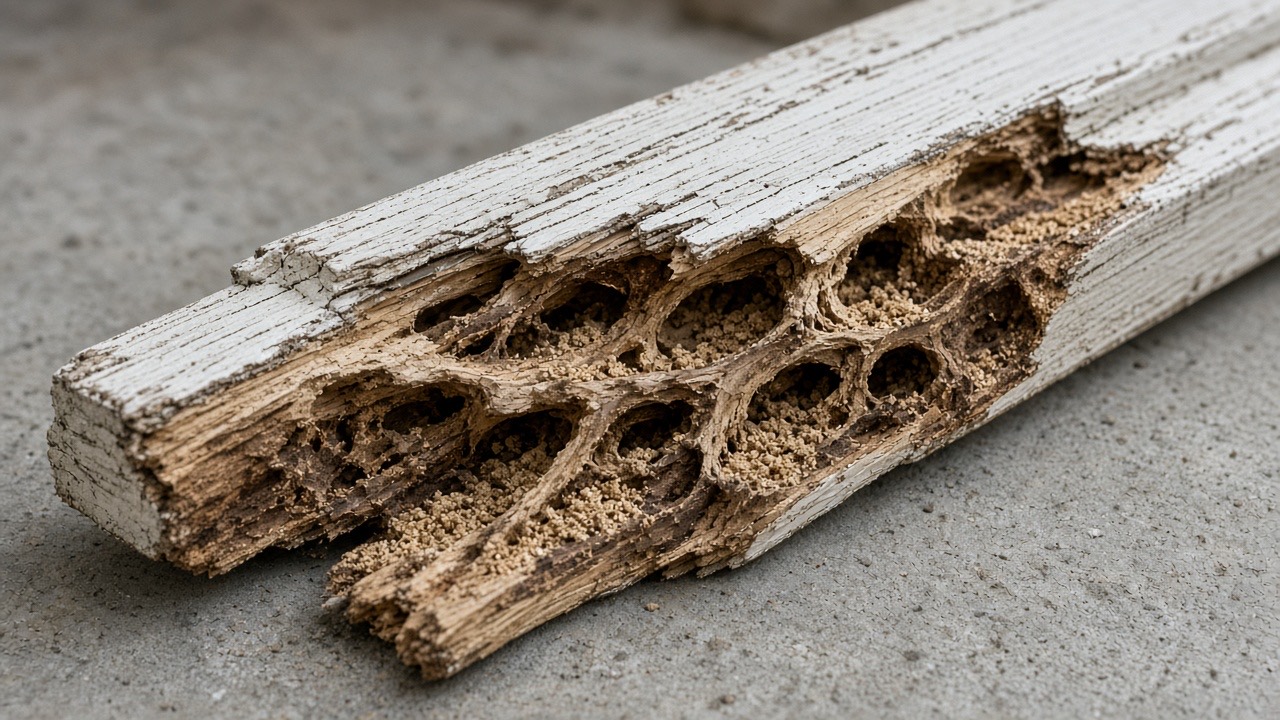
Drywood termites live entirely inside the wood they eat. They don't need contact with soil or an outside water source, which means they can show up anywhere: a second-story rafter, a picture frame, an antique dresser. A single home often has several separate colonies started by swarmers in different years.
The West Indian drywood termite deserves a special mention. It's one of the most destructive drywood species in the world and spreads easily in infested furniture. Buying used wood furniture? Look it over for pellets before it comes inside.
Drywood termites are the reason tent fumigation exists. Because the colonies are hidden inside walls and framing, the only way to treat all of them at once is to seal the structure and fill it with gas. Our drywood termite treatment page explains how it works.
Subterranean termites
Subterranean termites live underground in large colonies and travel into homes through mud tubes, pencil-width tunnels built along foundations, slab cracks, plumbing penetrations, and walls. They need moisture, so they're drawn to leaks, damp crawl spaces, and wood touching soil.
The native eastern subterranean termite is the most common. The invasive Formosan termite builds far larger colonies and can do serious damage much faster. Subterranean termites are treated in the soil with liquid termiticides or bait systems, not by tenting. More on that in our termite treatment overview.
Termite season in Florida
There's no true off-season, but swarms (the clouds of winged termites that start new colonies) follow a rough calendar in Central Florida:
| Season | What's swarming | When you'll notice |
|---|---|---|
| Late winter to spring (roughly Jan–Apr) | Eastern subterranean | Daytime swarms indoors, often near bathrooms, slab cracks, or door frames |
| Late spring to early summer (roughly Apr–Jun) | Formosan subterranean, West Indian drywood | Dusk and night swarms around porch lights and windows |
| Summer into fall | Southeastern drywood | Warm evenings, drawn to lights |
A warm, humid evening after rain is classic swarm weather. If you see swarmers inside the house, especially a cluster of discarded wings on a windowsill, there is very likely an active colony in or right next to the structure.
How much damage can termites do?
Termites work slowly and quietly, so damage often goes unnoticed for years. By the time you see sagging trim, a soft floor, or a door that suddenly sticks, a colony may have been feeding for a long time.
A few things every Florida homeowner should know:
- Homeowners insurance usually doesn't cover termite damage. Insurers treat it as preventable maintenance, not a sudden accident. Read your policy.
- Drywood damage is often hidden behind paint. The wood can look solid on the surface while galleries run through the inside.
- Subterranean damage can be structural. Formosan colonies in particular can damage framing, flooring, and even utility lines.
- Termites affect home sales. Most buyers order a wood-destroying organism (WDO) inspection before closing, and many lenders require one. Active termites or past damage can delay a sale or cost you at the negotiating table.
How to protect a Florida home from termites
You can't make a home termite-proof in Florida, but you can make it a much worse target and catch problems early.
Reduce what attracts them
- Fix moisture problems. Repair leaky gutters, roofs, plumbing, and AC drain lines. Point downspouts away from the foundation.
- Break wood-to-soil contact. Keep wood siding, fences, and trellises off the ground.
- Watch the mulch. Keep mulch a few inches back from the foundation, and don't let it bury the slab edge where you'd spot mud tubes.
- Move firewood and lumber away from the house and off the ground.
- Inspect used furniture for drywood pellets before bringing it inside.
Catch it early
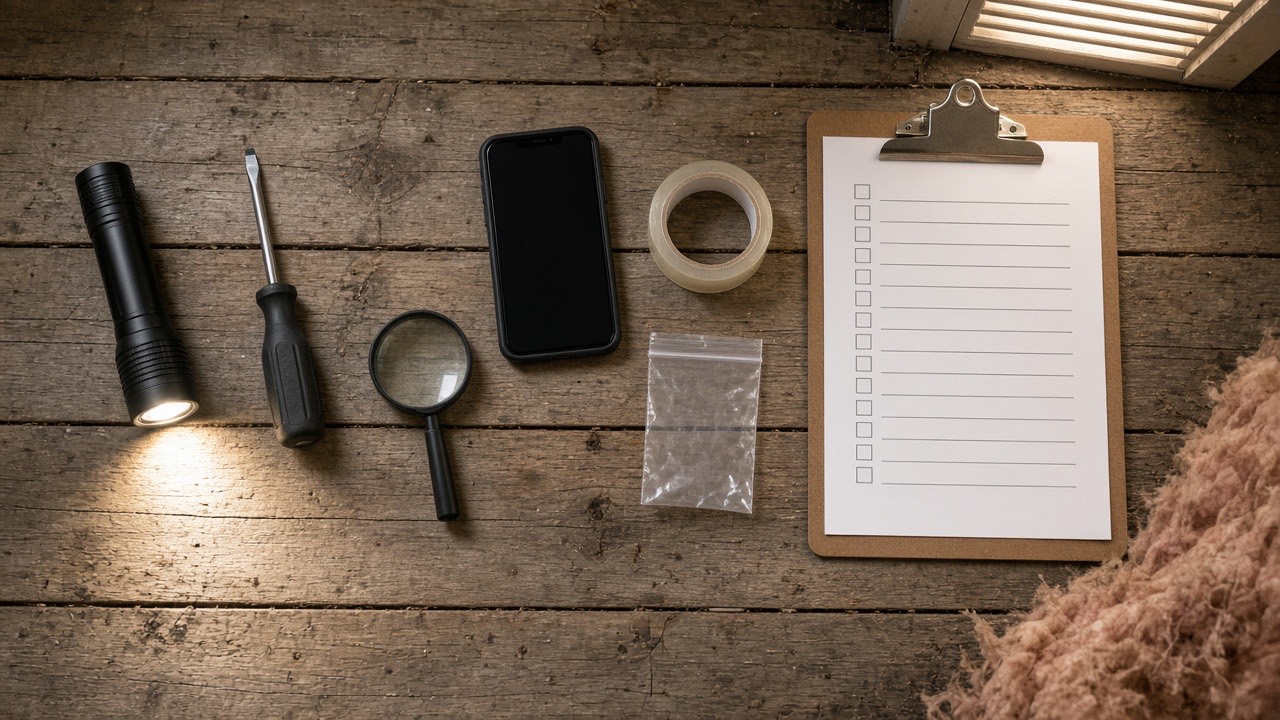
- Get an annual inspection. Florida's termite pressure makes a yearly termite inspection one of the cheapest ways to avoid an expensive repair.
- Check after swarm season. Look at windowsills, light fixtures, and sliding doors for discarded wings each spring.
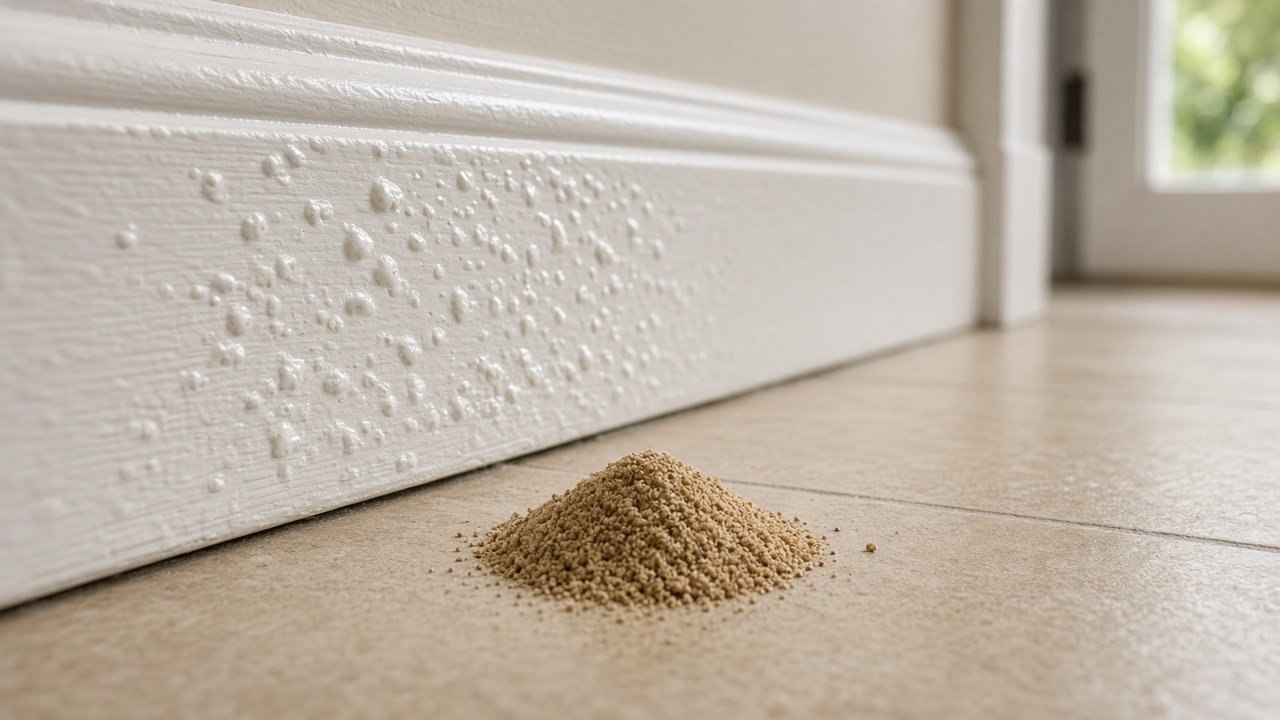
- Know the signs. Pellets, mud tubes, blistered paint, and hollow wood are all early warnings. Our guide to the signs of termites walks through each one.
Treat the right termite the right way
The single biggest mistake we see is treating for the wrong termite. Spraying the soil won't touch drywood termites in your attic, and tenting won't reach a subterranean colony underground. Get the species identified first, then pick the treatment. If it's drywood and it's in more than one spot, whole-structure tent fumigation is the method that reaches every colony at once. If you're weighing alternatives, read our honest comparison of heat treatment vs. tent fumigation.
Building codes and new construction
Florida's building code requires termite protection for new homes, typically a soil treatment applied before the slab is poured, or an approved alternative like a bait system. That protection is aimed at subterranean termites coming up from the soil. It does nothing to stop drywood termites, which fly in as swarmers and move straight into the wood. That's why newer homes still end up needing drywood treatment.
Frequently asked questions
Are termites active year-round in Florida?
Yes. Florida rarely gets cold enough to slow termites down, so colonies feed and grow all year. Swarming is seasonal, with subterranean termites peaking in late winter and spring and drywood termites swarming on warm evenings from spring through fall, but the damage never takes a break.
What is the most common termite in Florida?
The eastern subterranean termite is the most widespread species statewide. For homeowners in Central Florida, drywood termites are just as big a concern, because they live inside the wood of the house itself and often go unnoticed until there are several colonies.
Does homeowners insurance cover termite damage in Florida?
Usually not. Most policies treat termite damage as preventable wear and tear rather than sudden accidental damage. That's why early detection matters. An annual inspection and fast treatment cost far less than repairing structural damage out of pocket.
How do I know if I have drywood or subterranean termites?
Drywood termites leave small piles of hard, six-sided pellets below tiny holes in wood. Subterranean termites build mud tubes along foundations and walls and don't leave pellet piles. A professional inspection confirms the species, which matters because the two are treated completely differently.
When should I get a termite inspection in Florida?
Once a year is a smart baseline, ideally after spring swarm season. Get one right away if you see pellets, wings, mud tubes, or blistered wood, or if you're buying or selling a home.
Termites are part of life in Florida, but serious damage doesn't have to be. Keep moisture down, keep an eye out for the signs, and get the structure inspected every year. When termites do show up, find out exactly which kind you have before anyone treats them.