What Do Florida Termites Look Like? An ID Guide
What do Florida termites look like? How to identify drywood, subterranean, and Formosan termites, tell swarmers from flying ants, and read the signs they leave.
Think you have termites or bed bugs? Free survey & upfront quote from Randy Riesen.
Florida termites are small, soft-bodied insects with straight antennae and a thick waist with no pinch. Workers are creamy white and about the size of a grain of rice. Swarmers (the winged ones you're most likely to see) range from amber to nearly black and have two pairs of equal-length wings much longer than their bodies.
What you'll actually notice first is usually something they leave behind: a pile of tiny pellets, a mud tube, or a scatter of wings on a windowsill. This guide covers the termites you'll find in Central Florida, how to tell them apart, and how to tell them from the flying ants people mistake them for.
The three termite castes (and which one you'll see)
Every termite colony has three main types of termite, and they look quite different from each other:
- Workers are pale, creamy white, and wingless, roughly 1/8 to 3/8 inch long. They do the eating, so they're the ones damaging your house. You'll rarely see them unless you break open infested wood.
- Soldiers look like workers with an oversized, darker head and big jaws. They guard the colony. You'll see them in broken wood or a damaged mud tube.
- Swarmers (also called alates or reproductives) have wings and darker bodies. They leave the colony in large numbers to start new colonies. This is the termite most Florida homeowners actually see, usually flying around a light or window.
The main termites in Central Florida
Florida has more termite species than almost anywhere else in the country. Here in Central Florida, a few do almost all of the damage. (For swarm seasons, risks, and prevention, see Termites in Florida.)
| Termite | Swarmer color | Swarmer size (with wings) | When it swarms | Telltale sign |
|---|---|---|---|---|
| Drywood | Reddish-brown to dark brown | About 3/8–1/2 inch | Warm evenings and nights, spring through fall | Piles of tiny six-sided pellets |
| Eastern subterranean | Dark brown to black | About 3/8 inch | Daytime, late winter to spring | Mud tubes on foundations and walls |
| Formosan subterranean | Yellowish-brown, amber | About 1/2 inch | Dusk, late spring into summer | Mud tubes, huge swarms at lights |
| Asian subterranean | Brown | About 1/2 inch | Dusk, late winter to spring | Mud tubes, mostly South Florida |
Sizes and timing vary, but the color and the signs are the most useful clues.
Drywood termites
Drywood termites are our specialty, and they're the termite most Central Florida homeowners end up calling about. Florida's common species include the native southeastern drywood termite and the invasive West Indian drywood termite, which is notorious for infesting furniture and structural wood alike.
What they look like: Swarmers are reddish-brown to dark brown with smoky or lightly veined wings. Workers are cream-colored. Soldiers have a large, dark, rectangular head. In the West Indian species, the soldier's head is short and blunt, almost like a plug, because it uses its head to block holes in the colony.
Where you'll find them: Inside dry, sound wood with no soil contact. That includes attic framing, rafters, window and door frames, trim, baseboards, and furniture. A single house can have several separate colonies.
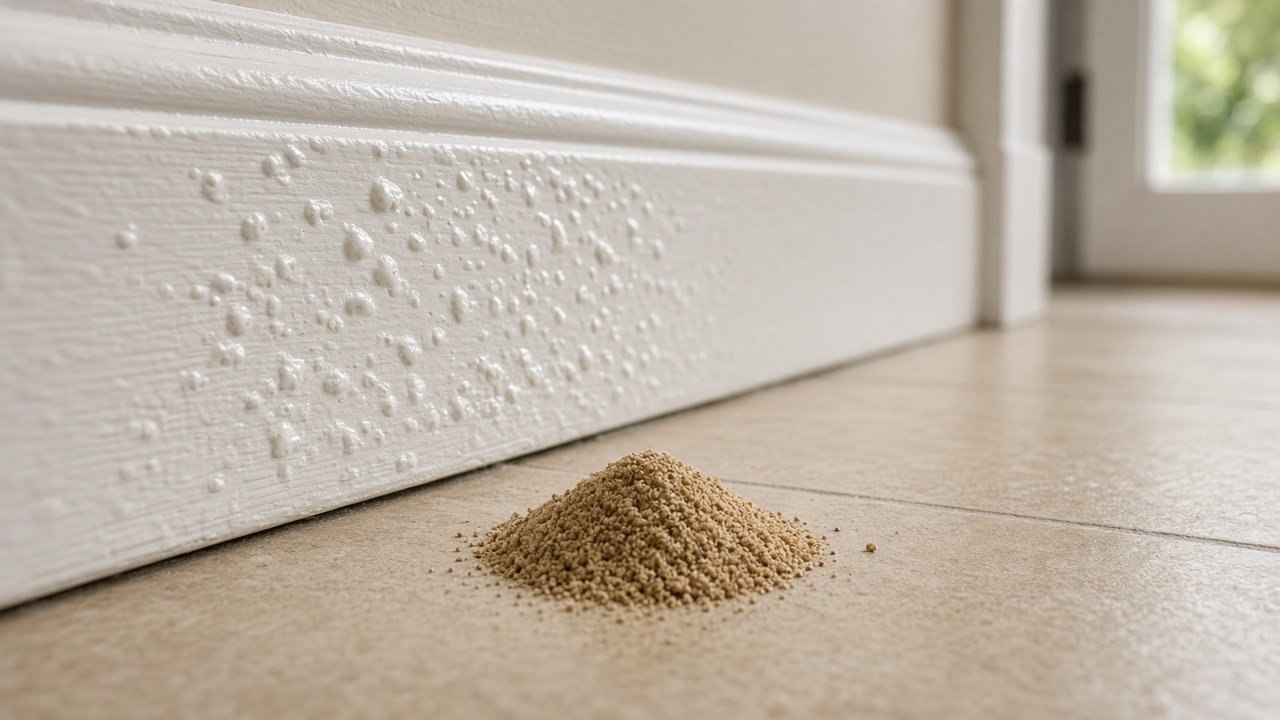
The giveaway: Drywood termites push their droppings out of small "kick-out" holes, leaving little piles of pellets (also called frass) below. The pellets are hard, about the size of a poppy seed, and have six flat sides if you look closely with a magnifying glass. Their color matches the wood they've been eating, so they can look like sand, sawdust, or coffee grounds.
Eastern subterranean termites
The eastern subterranean termite is the most widespread termite in the country, and it's common across Florida.
What they look like: Swarmers are dark brown to almost black, with clear or slightly grayish wings. Workers are creamy white. Soldiers have a long, yellowish-brown, rectangular head.
Where you'll find them: These termites live in the soil and need moisture. They travel into a house through mud tubes, pencil-width tunnels of soil and saliva running up foundations, slab edges, plumbing penetrations, and walls.
The giveaway: Mud tubes, and daytime swarms indoors in late winter or spring, often near a bathroom, a slab crack, or a door frame.
Formosan subterranean termites
Formosan termites are an invasive subterranean species with very large colonies. They're less common in Central Florida than along the coasts, but they are here.
What they look like: Swarmers are a distinctive yellowish-brown or amber color, larger than eastern subterranean swarmers, with hairy-looking wings. Soldiers have an oval, orange-brown head and can release a white, sticky fluid from the top of their head when disturbed.
The giveaway: Huge swarms around porch lights and windows at dusk in late spring and early summer. Formosans can also build "carton" nests inside walls, a spongy material made of chewed wood, soil, and saliva.
Asian subterranean and conehead termites
You may see these in the news. The Asian subterranean termite and the conehead termite are invasive species established mainly in South Florida. Conehead termites are unusual because they build dark, bumpy nests above ground and travel in the open. They're not a common Central Florida problem, but if you see something that matches either one, report it to an inspector.
Termite or flying ant?
Most of the "termite swarms" people call us about in spring turn out to be flying ants, and vice versa. Grab one (a piece of clear tape works) and check these three things:
| Feature | Termite swarmer | Flying ant |
|---|---|---|
| Antennae | Straight, like a string of beads | Bent at an elbow |
| Waist | Thick, no pinch | Narrow, pinched "wasp" waist |
| Wings | Two pairs, equal length, about twice as long as the body | Front wings longer than back wings |
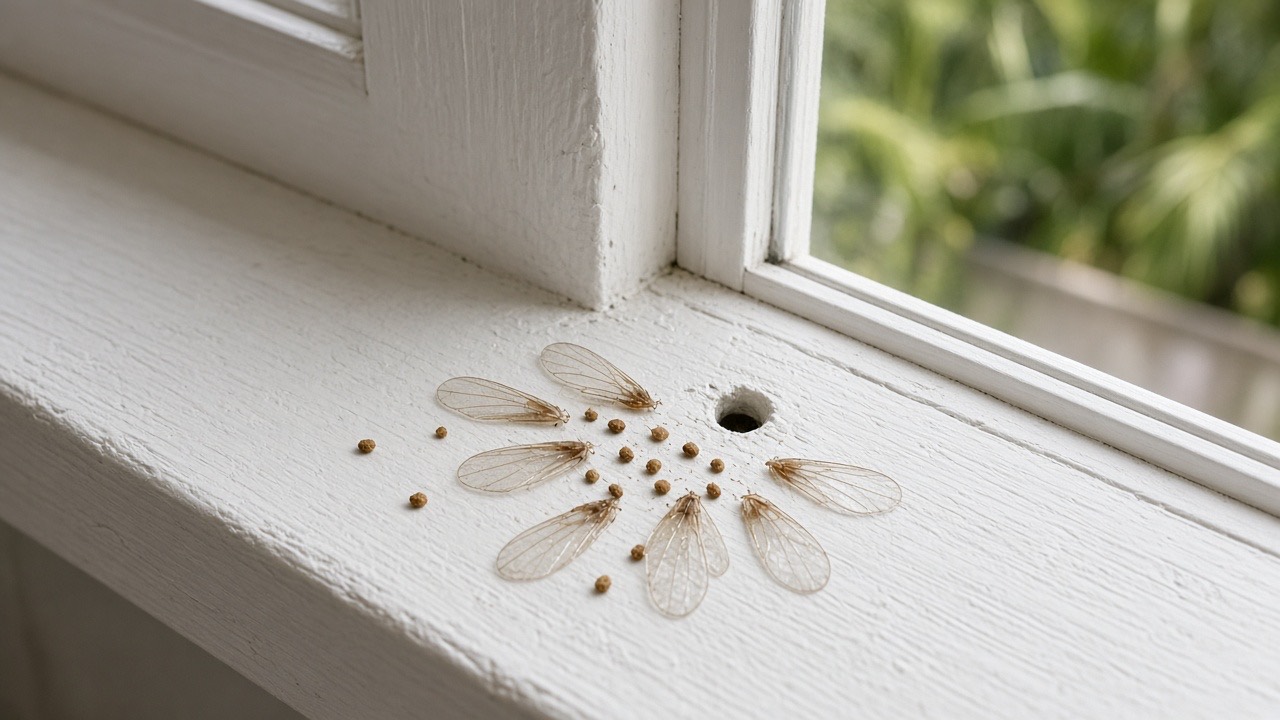
There's one more clue: termite swarmers shed their wings fast. If you find piles of identical, translucent wings on a windowsill, in a light fixture, or by a sliding door, but few or no insects, termites are the likely culprit.
Signs of termites in a Florida home
Even if you never see a live termite, these are the signs that tell you one is there (we go deeper on each in Signs of Termites):
- Pellet piles under baseboards, window sills, or furniture (drywood).
- Small, round kick-out holes in wood, sometimes patched over with a thin plug.
- Discarded wings near windows, doors, and lights.
- Mud tubes on foundations, slabs, or walls (subterranean).
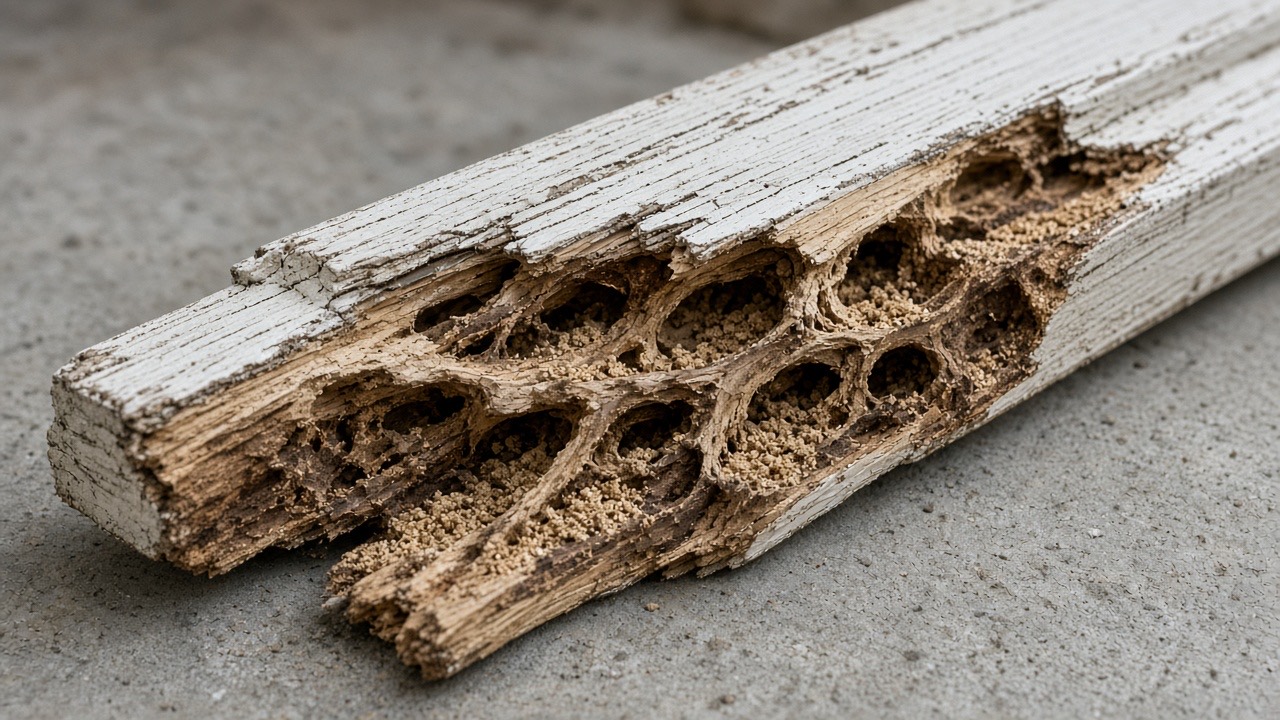
- Wood that sounds hollow when tapped, or that crumbles under a screwdriver.
- Blistered or bubbling paint, or trim that looks wavy.
- Doors and windows that suddenly stick, which can happen when termites distort the frame.
What to do if you find termites
- Don't spray them. Store-bought sprays kill the few you can see and scatter the rest, and they make the colony harder to identify.
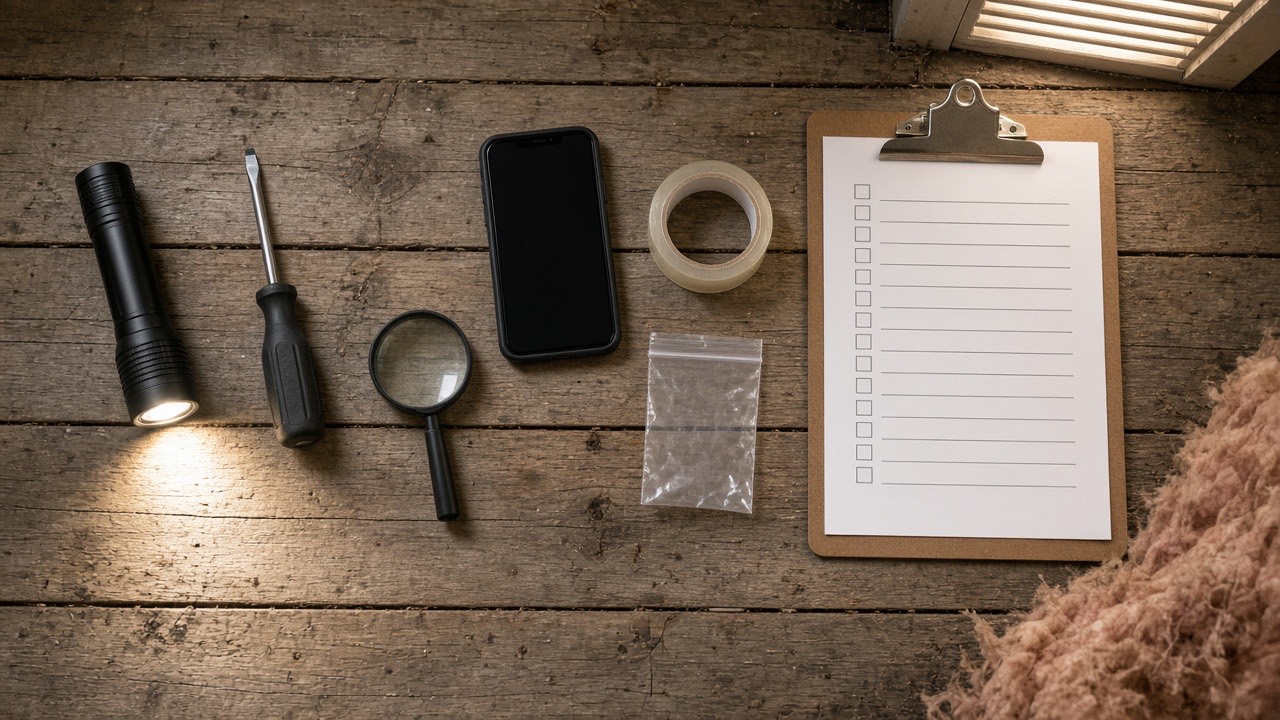
- Collect a sample. Press clear tape over a few swarmers or wings, or drop them in a sealed bag and put it in the freezer. Sweep a few pellets into a bag too.
- Take photos. Get the pellets, any holes, and any mud tubes, with a coin for scale.
- Get an identification. Drywood and subterranean termites are treated completely differently, so knowing which one you have is the most important step. A professional termite inspection confirms the species and maps where the activity is.
Drywood termites are best handled with whole-structure fumigation, because it reaches the colonies hiding in walls and framing that you can't see. Our drywood termite treatment page explains how it works, and if you're wondering whether you really need to tent, read our tent vs. no-tent termite treatment comparison. Subterranean termites live in the soil and need a soil or bait treatment instead. Tenting doesn't reach them. We'll tell you which one you have and what it actually needs. Learn more about your options on our termite treatment page.
Frequently asked questions
What color are termites in Florida?
Worker termites are creamy white or pale tan in every species. Swarmers vary: drywood swarmers are reddish-brown to dark brown, eastern subterranean swarmers are dark brown to black, and Formosan swarmers are a distinctive yellowish-brown or amber. Soldiers have a darker head than the rest of their body.
How big are termites?
Most termite workers are about 1/8 to 3/8 inch long, roughly the size of a grain of rice. Swarmers measured with their wings are usually 3/8 to 1/2 inch. Formosan swarmers are among the largest you'll see in Florida. The wings are about twice the length of the body.
Do termites in Florida fly?
Only the swarmers fly, and only for a short time. They leave the colony in large groups to mate and start new colonies, then shed their wings within minutes or hours. Seeing swarmers indoors usually means there's an active colony in or very near the house.
What time of year do termites swarm in Central Florida?
Eastern subterranean termites usually swarm during the day in late winter and spring. Formosan termites swarm at dusk in late spring and early summer. Drywood termites swarm on warm evenings and nights, mostly spring through fall, and are drawn to lights. A warm, humid evening after rain is classic swarm weather.
You don't have to become a termite expert. You just need to know enough to spot the signs and get the right diagnosis. Save a sample, take a photo, and have the structure looked at before you spend money on a treatment that doesn't match the termite.