Signs of Termites: 9 Early Warnings to Check
The signs of termites to look for in your home: pellets, wings, mud tubes, hollow wood, and more. What each sign means, how to check, and common false alarms.
Think you have termites or bed bugs? Free survey & upfront quote from Randy Riesen.
The most common signs of termites are small piles of pellet-like droppings, discarded wings near windows, mud tubes on foundations or walls, and wood that sounds hollow or crumbles when you press on it. Blistered paint, small holes in wood, and doors that suddenly stick can also point to termites hidden inside the walls.
Termites rarely show themselves. You'll almost always notice what they leave behind first. Below are the nine signs we look for on every inspection, what each one tells you, and the look-alikes that send homeowners into a panic for nothing.
1. Pellet piles (termite droppings)
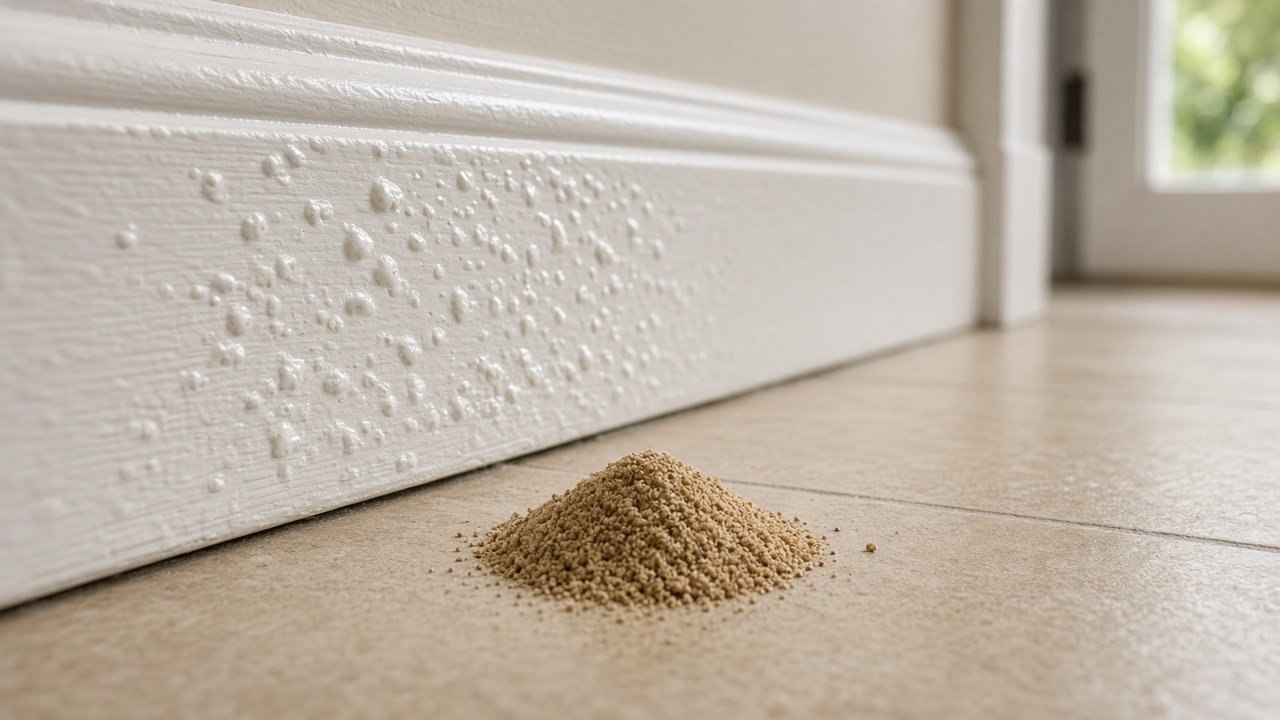
What it looks like: Small piles of tiny, hard grains under a baseboard, windowsill, door frame, or piece of furniture. They can look like sand, sawdust, or coffee grounds, and the color matches the wood the termites are eating.
What it means: Drywood termites. They push their droppings (called frass) out of tiny holes to keep their galleries clean. Under a magnifying glass, each pellet is oval with six flat sides. If you sweep a pile away and it comes back, the colony is active.
This is the number-one sign we see in Central Florida homes, and it's the reason most people call us.
2. Discarded wings
What it looks like: Piles of identical, translucent wings on a windowsill, in a light fixture, by a sliding door, or caught in a spider web. Often there are few or no insects left.
What it means: A termite swarm happened nearby. Swarmers fly, mate, and shed their wings within minutes or hours before trying to start a new colony. Wings inside the house usually mean the swarm came from a colony in the house.
3. Swarmers indoors
What it looks like: Dozens or hundreds of small winged insects flying around a window or light, often in spring or on a warm evening.
What it means: An established, mature colony. Colonies don't swarm until they're a few years old. Eastern subterranean termites tend to swarm during the day in late winter and spring; drywood and Formosan termites swarm at dusk and at night. Before you assume termites, make sure they aren't flying ants (see the false alarms below).
4. Mud tubes
What it looks like: Pencil-width tunnels of dried mud running up a foundation, slab edge, stem wall, pier, or interior wall. Break one open and you may see pale termites inside.
What it means: Subterranean termites. They live in the soil and build these tubes to travel into the house while staying protected from dry air. Check the outside of the slab, the garage, behind water heaters, and anywhere plumbing comes up through the floor.
5. Tiny holes in wood
What it looks like: Small round holes, about the size of a pinhead, in trim, furniture, or exposed framing. Sometimes they've been sealed with a thin, papery plug.
What it means: Drywood termite kick-out holes. This is where the pellets come from. Look directly above a pellet pile and you'll often find one.
6. Hollow or damaged wood
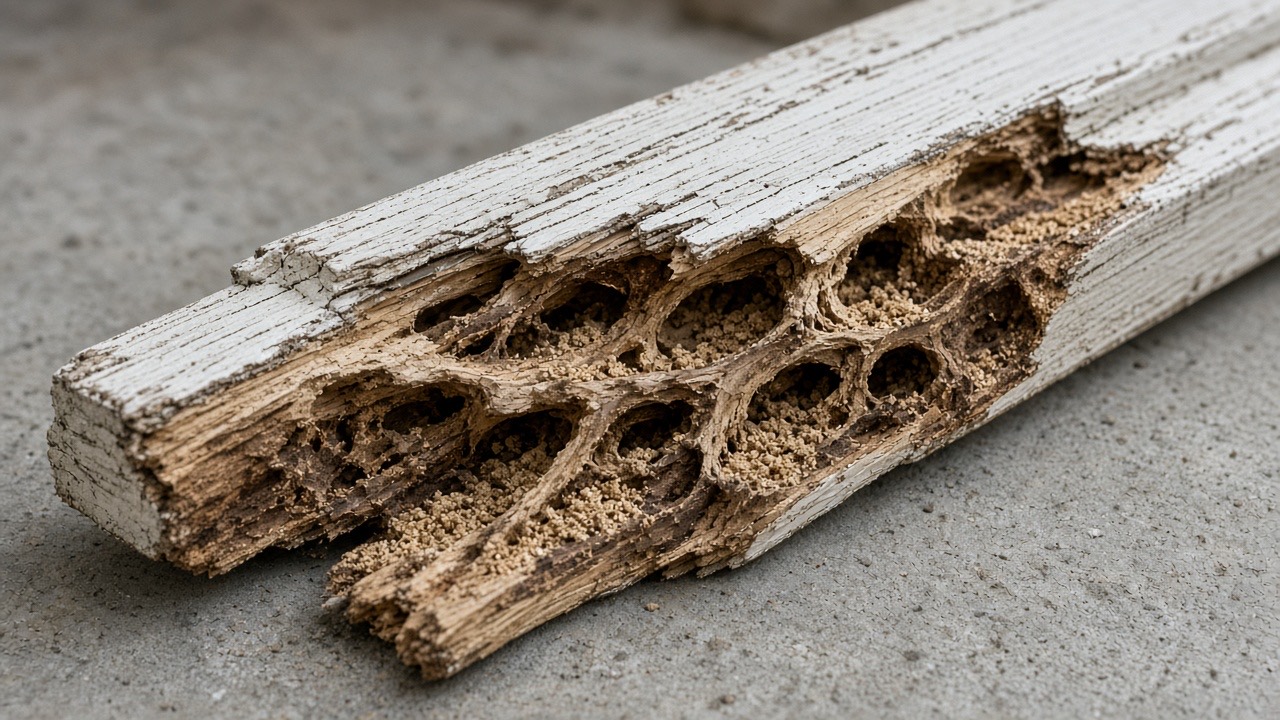
What it looks like: Wood that sounds hollow or papery when you tap it, or that gives way when you press a screwdriver into it. Inside, you may see smooth galleries (drywood) or layers packed with mud and soil (subterranean).
What it means: Termites have been feeding for a while. Drywood termites leave clean, smooth chambers that run across the grain. Subterranean termites follow the softer grain and leave mud behind. Our guide to termite damage shows how to tell old damage from active damage, and how to repair it.
7. Blistered or bubbling paint
What it looks like: Paint or wallpaper that bubbles, blisters, or looks wavy, often on trim, baseboards, or drywall near the floor.
What it means: Termites can tunnel right up to the surface, leaving just a thin layer of paint or wood. Moisture causes similar blistering, so check for leaks too, but don't assume it's "just humidity" without looking closer.
8. Doors and windows that suddenly stick
What it looks like: A door or window that used to close easily now sticks, or the frame looks slightly out of square.
What it means: Termite damage can distort a frame as the wood weakens. Humidity can do this too, so it's a supporting sign, not proof. If a sticking frame shows up alongside pellets or blistered paint, take it seriously.
9. Sagging floors or ceilings
What it looks like: Floors that feel soft or spongy, laminate or wood flooring that buckles, or a ceiling that sags or shows water-stain-like marks.
What it means: Advanced damage, usually from subterranean termites working through subfloors or from drywood colonies in the attic. At this stage, get an inspection right away. Repairs grow quickly the longer termites keep feeding.
Quick reference: which termite is it?
| Sign | Drywood termites | Subterranean termites |
|---|---|---|
| Pellet piles | Yes | No |
| Tiny kick-out holes | Yes | No |
| Mud tubes | No | Yes |
| Discarded wings | Yes | Yes |
| Damage pattern | Smooth, clean galleries | Galleries packed with mud |
| Typical treatment | Whole-structure tent fumigation | Soil treatment or bait system |
Want to see what the insects themselves look like? Our Florida termite identification guide covers every species you're likely to find.
Common false alarms
Not every pile of dust or winged bug means termites. These are the look-alikes we see most:
- Flying ants. Ants have bent antennae, a pinched waist, and front wings longer than the back wings. Termites have straight antennae, a thick waist, and four wings of equal length.
- Carpenter ant sawdust. Carpenter ants push out coarse, fibrous wood shavings, often mixed with insect parts. Termite pellets are hard, uniform grains.
- Powderpost beetles. They leave very fine, flour-like powder and tiny round exit holes. Different pest, different treatment.
- Moisture damage and wood rot. Soft, discolored wood near a leak can look like termite damage. Rot usually has a musty smell and no galleries inside.
- Construction debris. Sawdust left behind after drilling or a renovation won't come back after you sweep it up. Active termite pellets will.
How to check your home for termites
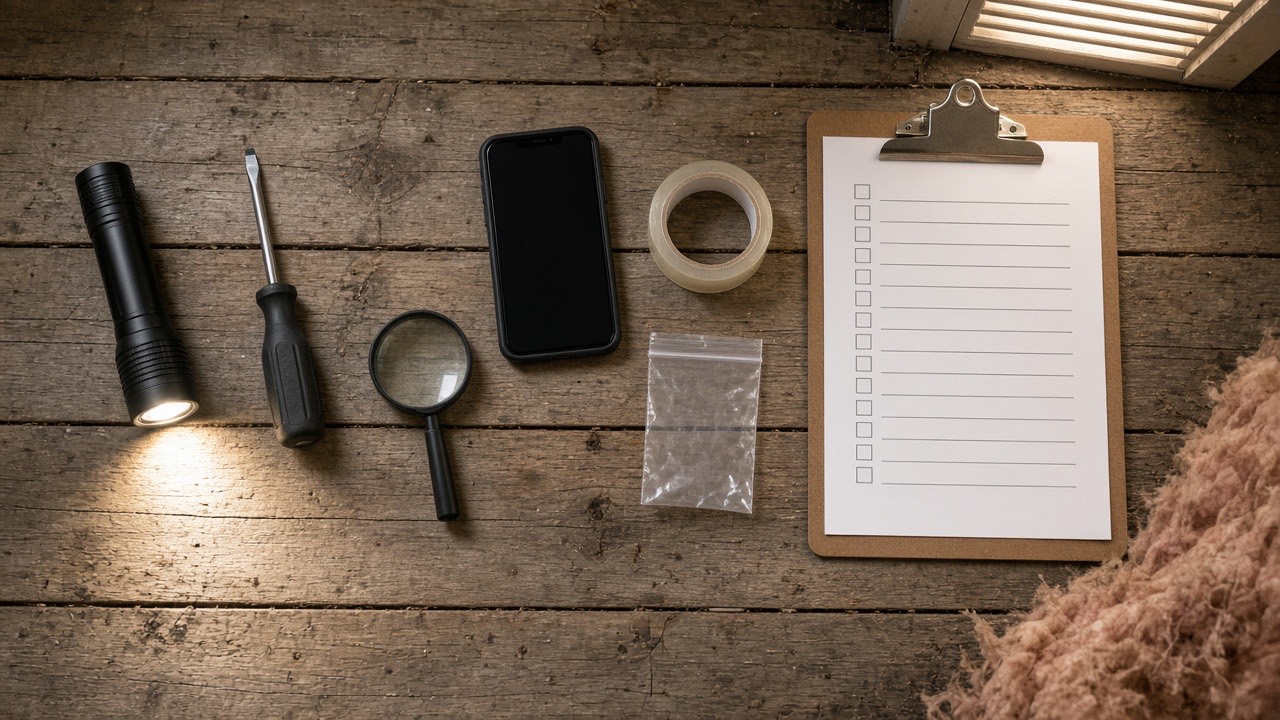
You don't need special training to do a basic check. Grab a flashlight, a screwdriver, and your phone camera, then look at the spots below. (For the full slab-to-attic walkthrough, see How to Inspect for Termites.)
- Windowsills and sliding doors for wings and pellets.
- Baseboards, door frames, and trim for pellet piles, tiny holes, and blistered paint. Tap the wood and listen for a hollow sound.
- The attic for pellets on insulation or ceiling drywall, and damage on rafters and trusses. Drywood termites love attics.
- The garage and exterior slab edge for mud tubes. Pull back mulch that touches the foundation.
- Under sinks, behind the water heater, and around AC drain lines, where moisture attracts subterranean termites.
- Wood furniture, especially antiques and secondhand pieces.
If you find something, don't spray it. Over-the-counter sprays scatter the colony and make it harder to identify. Take photos, sweep a few pellets or wings into a sealed bag, and get a professional termite inspection to confirm the species and how far it has spread.
What happens next
The sign tells you which termite you're likely dealing with, and that decides the treatment:
- Pellets, kick-out holes, or wings with no mud tubes usually point to drywood termites. If the activity is in more than one spot, whole-structure drywood termite treatment by tent fumigation reaches every hidden colony at once. Wondering if a spot treatment is enough? Read our tent vs. no-tent comparison.
- Mud tubes point to subterranean termites, which need a soil or bait treatment. Learn about your options on our termite treatment page.
Living in Florida? Read about the species and swarm seasons specific to our state in Termites in Florida.
Frequently asked questions
What are the first signs of termites?
The earliest signs are usually discarded wings on windowsills after a swarm, or a small pile of pellet-like droppings under a baseboard or windowsill. Both often appear before any visible damage. Mud tubes on the foundation are an early sign of subterranean termites.
What do termite droppings look like?
Drywood termite droppings are tiny, hard, oval pellets with six flat sides, usually found in small piles below a pinhead-sized hole in wood. Their color matches the wood being eaten, so they can look like sand, sawdust, or coffee grounds. Subterranean termites don't leave pellet piles.
Can you hear termites in the walls?
Sometimes. Soldier termites bang their heads against the wood to warn the colony, which can make a faint clicking or rustling sound in a quiet room. It's an unreliable sign, though. Most homeowners never hear anything, so don't rely on sound to rule termites out.
Do termite signs mean my house is damaged?
Not necessarily badly damaged, but there is an active colony feeding on wood. Caught early, damage is often limited to trim or a few framing members. The longer termites go untreated, the more damage they do, so get an inspection as soon as you notice a sign.
Should I treat termites myself?
For drywood termites, DIY sprays only reach the termites you can see, and colonies are usually spread through walls you can't open. For subterranean termites, professional soil treatments and bait systems are far more effective than store-bought products. Get the species confirmed before spending money on any treatment.
Termites leave clues long before a floor sags or a beam fails. Learn the nine signs, check your home a couple of times a year, and don't ignore a pile of pellets or a handful of wings. If you find something, get it identified, because the right treatment depends entirely on which termite you have.