Termite Damage: How to Spot It and Fix It
What termite damage looks like, how to tell it from water damage or rot, whether it is old or active, and how to repair it the right way after treatment.
Think you have termites or bed bugs? Free survey & upfront quote from Randy Riesen.
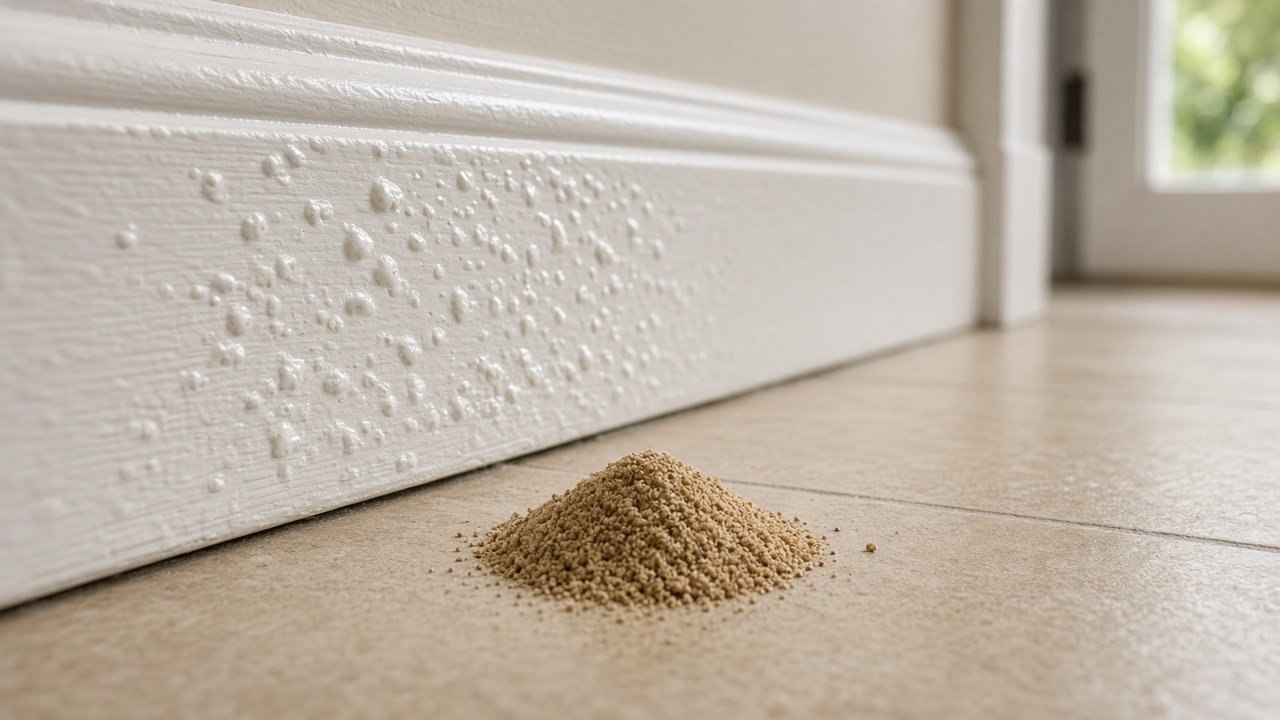
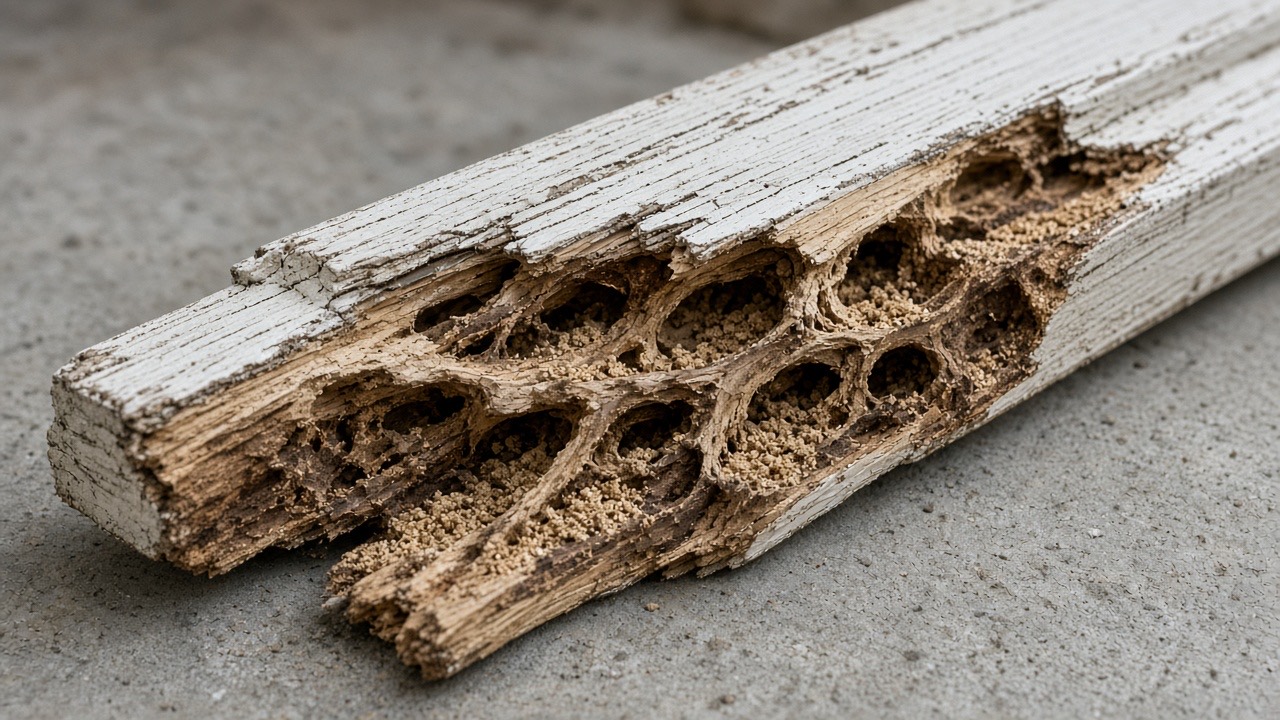
Termite damage usually looks like wood that's hollowed out from the inside: trim or framing that sounds hollow when tapped, crumbles under light pressure, or shows blistered, wavy paint. Drywood termites leave smooth, clean tunnels and small piles of pellets. Subterranean termites leave tunnels packed with mud and soil.
The tricky part is that termites eat from the inside out, so the surface often looks fine long after the damage starts. This guide shows you how to recognize termite damage, tell whether it's still active, and fix it in the right order.
What termite damage looks like
Drywood termite damage
Drywood termites live inside the wood they eat, so their damage is hidden behind a thin shell of intact wood or paint.
- Smooth, clean galleries that cross the grain, almost like the wood was sanded inside.
- Small piles of pellets (frass) on the floor or windowsill below the damage.
- Pinhead-sized kick-out holes in the surface, sometimes sealed with a papery plug.
- Blistered or bubbling paint where galleries run just under the surface.
- Hollow, papery sound when you tap the wood.
You'll find it most often in attic framing, window and door frames, baseboards, trim, fascia, and wood furniture.
Subterranean termite damage
Subterranean termites travel up from the soil and need moisture, so their damage looks different.
- Galleries that follow the grain, eating the soft springwood and leaving the harder rings, so the wood looks layered or honeycombed.
- Mud and soil packed into the tunnels.
- Mud tubes on the foundation, slab edge, or walls leading to the damage.
- Damage near the ground first: door frames on the slab, sill plates, subfloors, and wood near plumbing.
- Buckling floors, sagging ceilings, or stains that look like water damage.
Termite damage vs. look-alikes
Plenty of wood problems get blamed on termites. Here's how to tell them apart.
| Problem | What you'll see | How it differs from termites |
|---|---|---|
| Drywood termites | Smooth galleries, six-sided pellets, tiny holes | — |
| Subterranean termites | Layered galleries packed with mud, mud tubes | — |
| Water damage / wood rot | Soft, dark, stringy or cracked wood, musty smell | No galleries, no pellets, no mud tubes |
| Carpenter ants | Clean, smooth tunnels with coarse, fibrous sawdust piles | Sawdust is shredded wood, often with insect parts, not hard pellets |
| Powderpost beetles | Tiny round exit holes, fine flour-like powder | Powder is soft and dusty, not grainy pellets |
Moisture and termites often go together, especially with subterranean termites, so it's worth checking for both.
Is the damage old or active?
This is the question that decides whether you need treatment, repair, or both. Signs that termites are still active:
- Pellets come back. Sweep or vacuum a pellet pile and check the spot over the next week. New pellets mean a live drywood colony.
- Mud tubes get rebuilt. Break open a small section of a mud tube. If it's repaired within a few days, subterranean termites are using it.
- Live termites inside. Pale, soft-bodied insects in broken wood or a damaged tube.
- Fresh swarmers or wings inside the house.
- Damage that keeps spreading: new blistered paint, new holes, new soft spots.
Old damage on its own (dry, empty galleries with no new pellets or tubes) may be left over from a previous infestation that was treated. A professional termite inspection can confirm whether it's active, which matters for both treatment and home sales.
How serious is termite damage?
It depends on the termite and how long it's been feeding.
- Drywood colonies are relatively small and eat slowly. The damage usually builds over years and is often limited to specific boards. The danger is that a house can have several colonies, each quietly working on a different spot.
- Subterranean colonies are much larger. The invasive Formosan termite in particular can do significant damage far faster than native species.
- Structural vs. cosmetic. Damage to baseboards and trim is cosmetic and easy to replace. Damage to load-bearing framing, rafters, joists, or sill plates is structural and needs a contractor, and possibly an engineer, to assess.
Signs the damage may be structural: sagging rooflines or ceilings, floors that bounce or slope, cracks forming in drywall, and doors or windows that suddenly won't close.
How to fix termite damage (in the right order)
1. Treat the termites first
Never repair before treating. New wood is just more food, and covering up active damage hides the problem while the colony keeps feeding.
- Drywood termites in more than one area: whole-structure drywood termite treatment by tent fumigation reaches every hidden colony at once, including the ones behind walls you're about to repair. For a typical single-family home, our estimates usually fall around $2,500–$2,800, depending on size and construction. See the tent fumigation cost guide for what drives the price.
- Subterranean termites: a soil treatment or bait system. See our termite treatment overview.
2. Assess the extent
Once the termites are dead, open up the damaged areas and probe the surrounding wood. Damage often extends further than it looks from the surface. For anything structural, have a licensed contractor evaluate it.
3. Repair or replace
- Minor cosmetic damage to trim or furniture: fill with wood filler or a two-part epoxy wood consolidant, sand, and repaint.
- Damaged trim, baseboards, and door jambs: usually faster and cleaner to replace outright.
- Damaged studs, joists, or rafters: a contractor may "sister" a new board alongside the damaged one or replace it entirely, depending on how much strength is lost.
- Subfloors and flooring: replace damaged sections, and fix any moisture source first.
4. Keep the paperwork
Save your treatment receipt, guarantee, inspection reports, and repair invoices. Buyers, inspectors, and lenders will ask for them when you sell.
Does insurance cover termite damage?
Usually not. Most homeowners insurance policies treat termite damage as preventable maintenance rather than sudden, accidental damage. A few policies cover damage that results from a covered event, such as a collapse, but you should never count on it. Read your policy, and treat early so the damage stays small.
Termite damage and selling a home in Florida
Most Florida buyers order a wood-destroying organism (WDO) inspection, and many lenders require one. The report notes active termites, visible damage, and evidence of past treatment. Florida law also generally requires sellers to disclose known defects that materially affect a home's value, and known termite damage can fall into that category. Talk to your real estate agent or attorney about your situation.
The best position to be in is having treatment records, a current guarantee, and completed repairs ready to show. For more on Florida-specific risks, read Termites in Florida.
Frequently asked questions
What does termite damage look like on wood?
Termite-damaged wood often looks normal on the surface but sounds hollow when tapped. Inside, drywood termites leave smooth, clean tunnels and pellets; subterranean termites leave layered tunnels packed with mud. Other clues include blistered paint, tiny holes, and wood that crumbles under a screwdriver.
Can termite damage be repaired?
Yes. Most termite damage can be repaired once the termites are treated. Cosmetic damage to trim can be filled or replaced. Structural damage to framing is reinforced or replaced by a contractor. Always treat first, because repairing over an active colony just gives the termites new wood to eat.
How long does it take termites to cause serious damage?
It varies. Drywood termite colonies are small and usually take years to cause significant damage, but one house can have several. Subterranean colonies are much larger, and Formosan termites can cause serious damage far more quickly. Because the damage is hidden, it's often been going on for a while by the time you notice it.
How can I tell if termite damage is old or new?
Look for activity. Sweep away pellets and see if new ones appear within a week, or break open a mud tube and see if it gets rebuilt. Live termites, fresh wings, and spreading damage also mean it's active. Dry, empty galleries with no new signs may be old damage from a past infestation.
Is a house with termite damage safe to live in?
Usually, yes. Most termite damage is limited to trim and individual boards. But if you notice sagging ceilings, bouncing floors, or new drywall cracks, have a contractor check the structure. Either way, get the termites treated promptly so the damage doesn't spread.
Termite damage is fixable. The key is doing it in the right order: confirm the termites are active, identify the species, treat the whole problem, and then repair. Skipping straight to repairs is how homeowners end up paying for the same damage twice.