How to Inspect for Termites: A DIY Checklist
How to inspect for termites yourself: the tools you need, a room-by-room checklist from slab to attic, what to look for, and when to call a professional.
Think you have termites or bed bugs? Free survey & upfront quote from Randy Riesen.
To inspect for termites yourself, work from the outside in with a flashlight and a screwdriver. Check the foundation and slab edge for mud tubes, the garage and plumbing areas for moisture and damage, then windowsills, baseboards, door frames, and the attic for pellets, wings, tiny holes, and hollow-sounding wood. Photograph anything you find.
A DIY check takes about an hour and won't replace a professional inspection, but it's the best way to catch termites early between visits. Here's the exact route we'd walk through a Central Florida home.
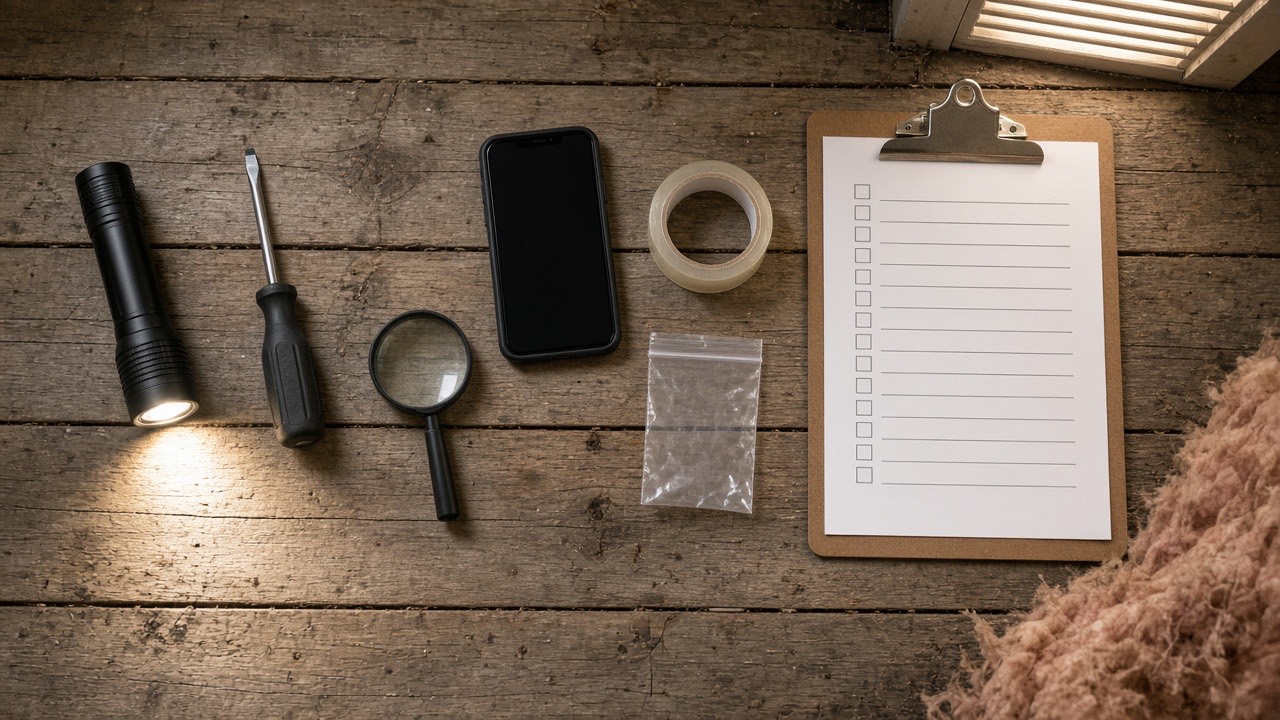
What you'll need
- A bright flashlight. Termite signs hide in shadows: under sinks, behind appliances, in attic corners.
- A flathead screwdriver. For gently probing wood that looks or sounds suspicious.
- A magnifying glass (or your phone's zoom) to check pellets up close.
- Your phone for photos. Put a coin next to anything you photograph for scale.
- Clear tape and a zip-top bag for collecting wings, insects, or pellets.
- Long sleeves, gloves, and a dust mask for the attic.
Before you start: know what you're looking for
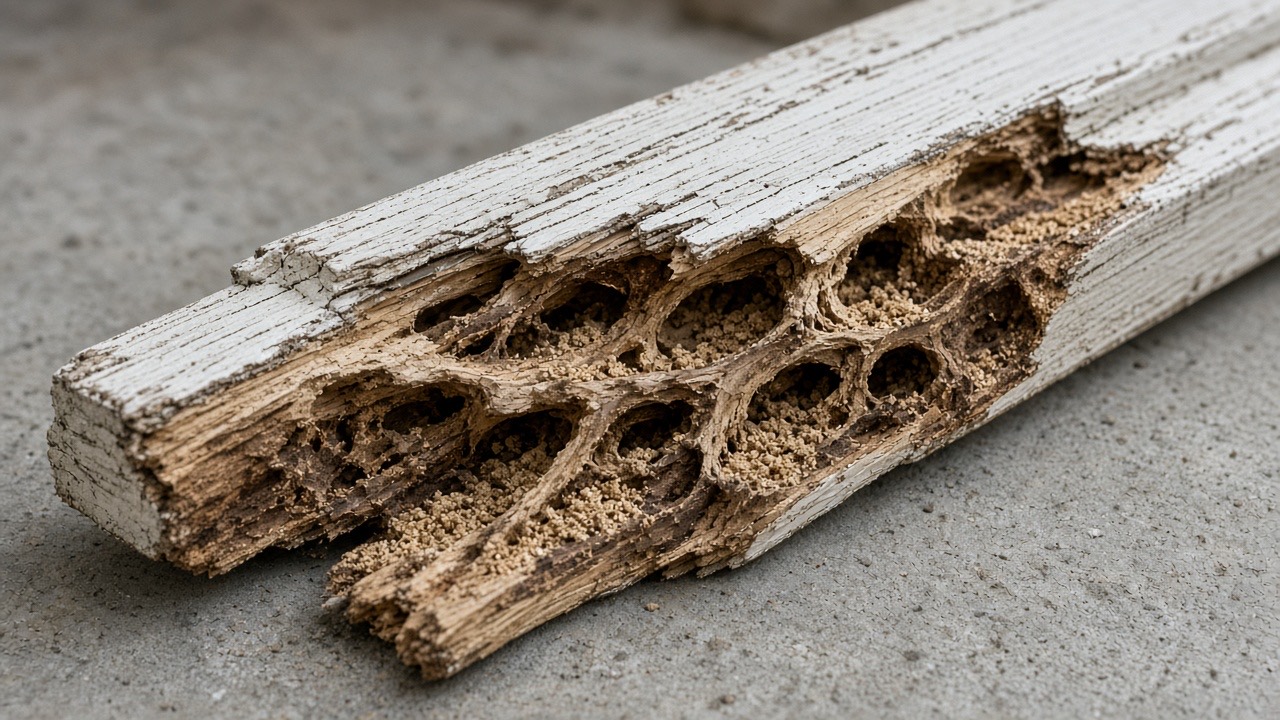
There are two kinds of termites you need to check for, and they leave different clues.
| Drywood termites | Subterranean termites | |
|---|---|---|
| Live in | The wood itself | The soil |
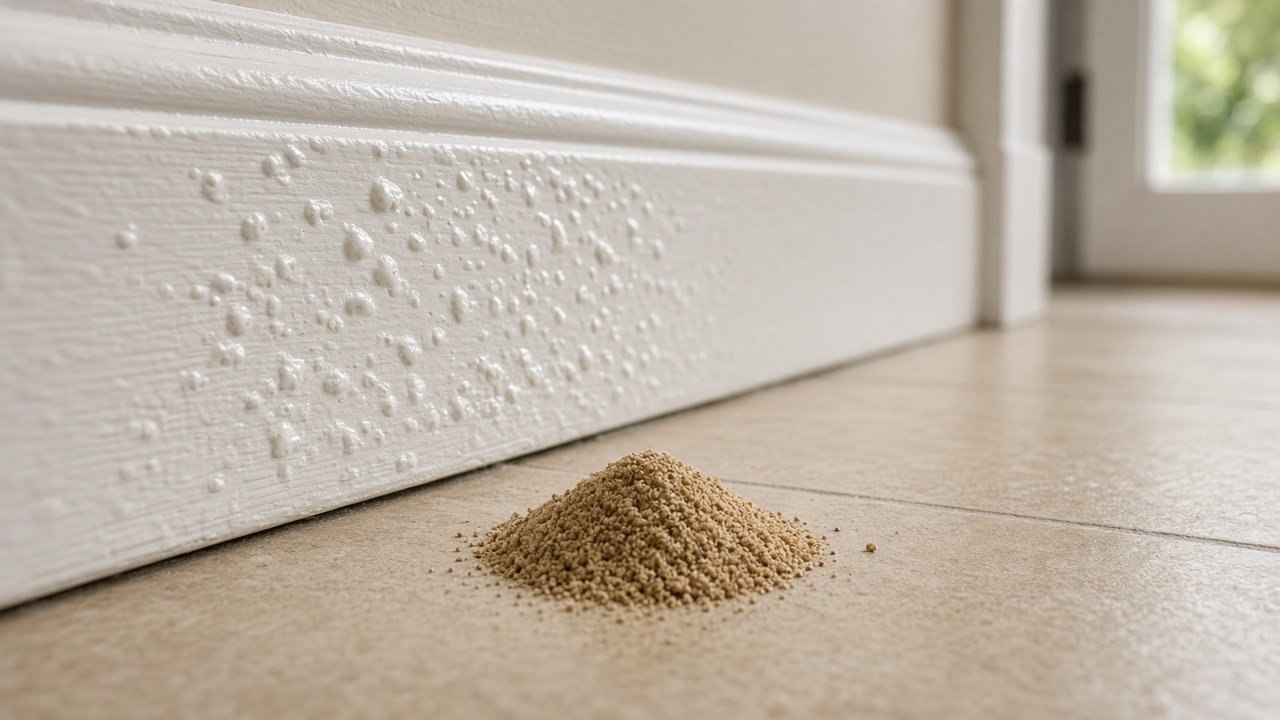
| Main clue | Small piles of hard, six-sided pellets | Mud tubes |
| Where to look | Attic, trim, window and door frames, furniture | Slab edge, foundation, garage, plumbing |
If you want a refresher on each warning sign, read our guide to the signs of termites first.
Step 1: The outside of the house
Start outside, where subterranean termites enter.
- Walk the full perimeter of the slab or foundation. Look for pencil-width mud tubes climbing the stem wall or stucco. Pay extra attention to corners, steps, and where patios or driveways meet the house.
- Pull back mulch and plants that touch the foundation. Mulch piled against the slab hides tubes and holds moisture.
- Check where wood meets soil: fence posts attached to the house, wooden steps, trellises, and siding that runs down to the dirt.
- Look at exterior trim, fascia, and window frames. Probe any soft or blistered spots with the screwdriver.
- Note moisture problems. Leaky hose bibs, downspouts dumping next to the slab, AC condensate lines, and sprinklers spraying the wall all attract termites.
- Check stored wood. Firewood or lumber stacked against the house is an open invitation.
Step 2: The garage
Garages are a favorite entry point because the slab edge and framing are exposed.
- Inspect the base of every wall where drywall or framing meets the slab, looking for mud tubes and damaged wood.
- Check the expansion joint and any cracks in the slab floor.
- Look behind the water heater, washer, and stored boxes. Termites love dark, undisturbed corners.
- Check door jambs and the garage door frame for pellets, holes, or soft wood.
Step 3: Inside the house, room by room
Now look for drywood signs and any subterranean termites that made it inside.
- Windowsills and sliding doors: discarded wings and pellets. Swarmers fly toward light, so they often die or shed wings here.
- Baseboards and door frames: small pellet piles on the floor, pinhead-sized holes, and blistered or wavy paint. Tap along the wood with the screwdriver handle and listen for a hollow, papery sound.
- Kitchens and bathrooms: open the cabinets under every sink and look at the cabinet floor, back wall, and plumbing penetrations for mud, damage, or pellets.
- Floors: soft or spongy spots, buckling laminate or hardwood, and gaps forming along the baseboard.
- Walls and ceilings: bubbling paint, small pinholes in drywall, and stains that look like water damage but have no obvious leak.
- Doors and windows that stick when they never used to.
Step 4: The attic
The attic is where drywood termites often do the most damage unseen. Step only on joists or a solid walkway, never on drywall.
- Shine your light along rafters and trusses, especially near the eaves and where the roof meets exterior walls.
- Look for pellets on top of insulation, on the attic floor, and on horizontal boards. Piles in the attic can be harder to spot, so look for scattered grains on dark surfaces.
- Check around attic vents and gable ends, where swarmers often get in.
- Probe suspicious wood gently. Healthy wood resists the screwdriver; damaged wood gives way or sounds hollow.
- Look for moisture: roof leaks, stained sheathing, or damp insulation.
Step 5: Furniture and wood items
Drywood termites don't care whether wood is part of the house. Check wood furniture, especially antiques and secondhand pieces, picture frames, bookshelves, and wood stored in closets. Look underneath and on the backs, where pellets collect.
How to document what you find
If you find something suspicious:
- Don't spray it or sweep it all away. Store-bought sprays scatter termites and make the colony harder to identify.
- Take clear photos with a coin for scale: wide shots to show the location and close-ups of the pellets, wings, tubes, or damage.
- Collect a sample. Press clear tape over wings or insects, or sweep a few pellets into a zip-top bag.
- Sweep the area clean and check back in a few days. New pellets in the same spot mean an active drywood colony.
- Write down every location. Activity in more than one room changes the treatment recommendation.
DIY check vs. professional inspection
A DIY check is great for catching obvious signs early. A professional termite inspection goes further:
| DIY check | Professional inspection | |
|---|---|---|
| Finds obvious signs | Yes | Yes |
| Identifies the species | Sometimes | Yes |
| Spots subtle or hidden activity | Rarely | Yes, from years of knowing where to look |
| Maps how far it has spread | No | Yes |
| Recommends the right treatment | No | Yes, with an upfront quote |
The biggest value of a professional inspection is the identification. Drywood and subterranean termites need completely different treatments, and treating the wrong one wastes money while the real colony keeps eating.
How often should you check?
In Florida, do a quick DIY walk-through twice a year, once after spring swarm season and once in the fall, and get a professional inspection once a year. Check sooner if you see swarmers, find wings, or are buying or selling a home. Our guide to termites in Florida explains when each species swarms.
Frequently asked questions
Can I inspect for termites myself?
Yes. With a flashlight, a screwdriver, and about an hour, you can check the most common places termites show up: the slab edge, garage, windowsills, baseboards, under sinks, and the attic. A DIY check catches obvious signs early, but it can't reliably identify the species or map hidden activity like a professional inspection can.
How do you check for termites in walls?
Tap along baseboards and drywall and listen for a hollow or papery sound. Look for pinhead-sized holes, bubbling paint, small pellet piles on the floor below, and mud tubes where walls meet the slab. Inside wall voids, colonies are usually invisible, so a professional inspection is the best way to confirm activity.
What does a termite inspector look for?
A termite inspector checks the interior, exterior, attic, and garage for pellets, kick-out holes, discarded wings, mud tubes, and damaged or hollow-sounding wood. They identify whether it's drywood or subterranean termites, map where the activity is, and recommend a treatment.
When is the best time to check for termites in Florida?
After spring swarm season (roughly late spring) is a great time, because discarded wings and fresh pellets are easy to spot. A second check in the fall catches drywood termites that swarm later in the year. Termites are active year-round in Florida, so any time is better than never.
You don't need to be an expert to catch termites early. Walk the house from the outside in a couple of times a year, take photos of anything that looks off, and get a professional to confirm what you've found before anyone starts treating.