Heat Treatment vs. Tent Fumigation for Termites
Does heat treatment for termites work as well as tenting? An honest look at coverage, cost, prep, and time out of the house for Central Florida homes.
Think you have termites or bed bugs? Free survey & upfront quote from Randy Riesen.
Heat treatment for termites can kill drywood termites, but only in wood that actually gets hot enough, long enough. Tent fumigation fills the whole structure with gas, so it reaches every board, including the ones heat can't. For a small, isolated area, heat can work. For an infestation spread through the house, tenting is the more reliable fix.
That's the short answer. The rest of this post explains why, so you can make the call for your own home, whatever a salesperson tells you.
How heat treatment for termites works
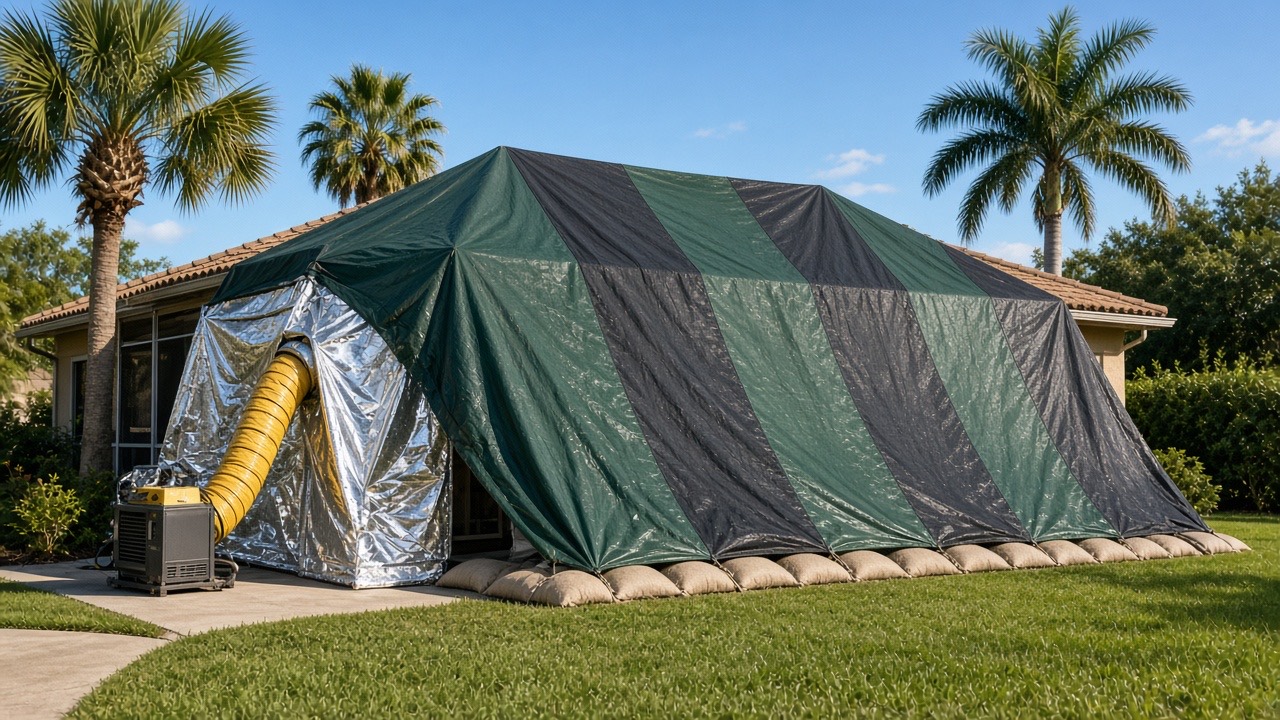
A heat crew wraps the house (or one section of it) in insulated tarps and runs large propane or electric heaters, ducting hot air inside. The goal is to bring the core of the wood, not just the air, to a lethal temperature of roughly 120°F and hold it there for at least half an hour. Crews push the air much hotter, often 140°F to 160°F or more, and use temperature probes drilled into the wood to check progress.
When it works, it works fast. Most heat jobs are done in a single day, there's no gas involved, and you can usually sleep at home that night.
The catch is in that phrase "the core of the wood." Hot air heats the surface first. Getting heat deep into a thick beam, a stud packed against a block wall, or framing buried behind insulation takes a long time, and some of it never gets there.
How tent fumigation works
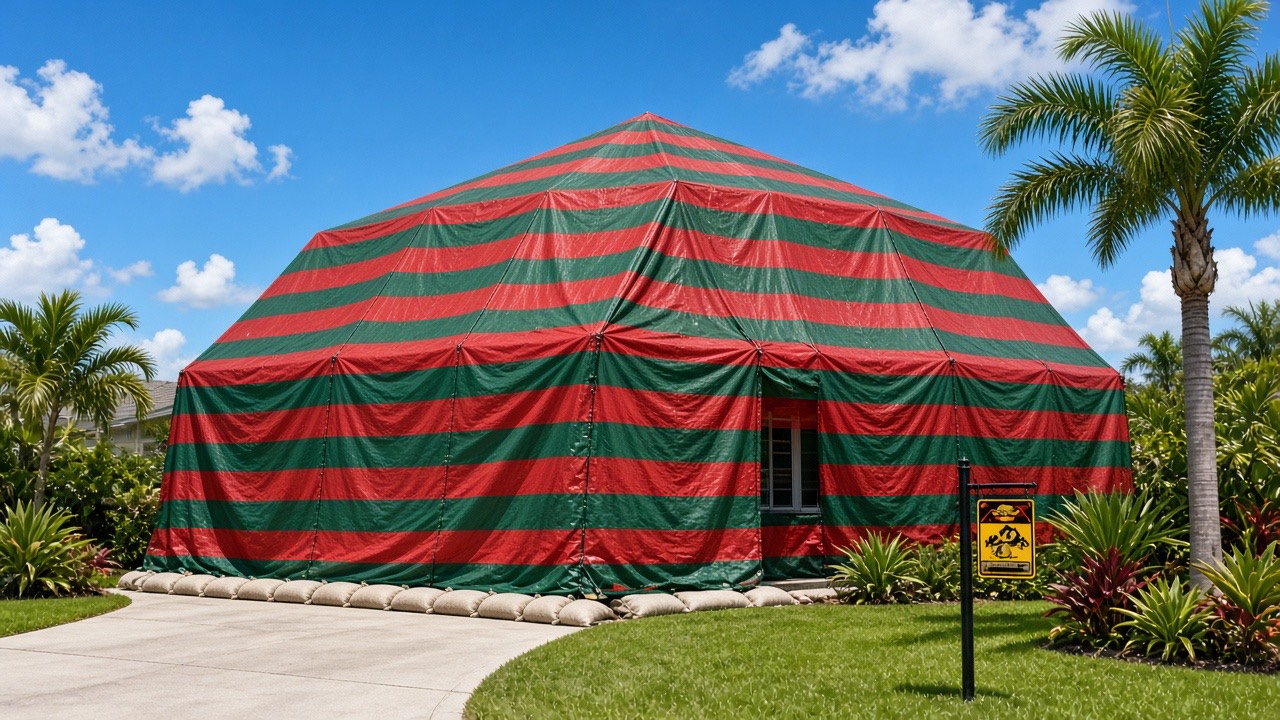
With tent fumigation, the crew covers the entire structure in tarps, seals the edges, and introduces a fumigant gas (in our case, Vikane, which is sulfuryl fluoride). Fans spread the gas evenly through every room, wall void, attic space, and piece of furniture. Because it's a true gas, it moves through wood rather than heating it from the outside in. Termites deep inside a rafter are exposed to the same concentration as termites near the surface.
After the exposure period, the tarps come off, the house aerates, and a licensed fumigator tests the air with clearance equipment. You go back in only after the readings say it's safe. Most homes are under the tent for 24–72 hours, depending on size and construction. We cover the whole process step by step in What Is Fumigation and How Does It Work?.
Heat vs. tenting, side by side
| Heat treatment | Tent fumigation | |
|---|---|---|
| What it treats | The area tented and heated, as far as the heat penetrates | The entire sealed structure |
| Hidden colonies | Can be missed in dense or insulated wood | Gas reaches wall voids, beams, and furniture |
| Time out of home | Usually one day | Typically 24–72 hours |
| Prep | Remove heat-sensitive items (electronics, candles, plants, medicine, aerosols) | Bag or remove food and medicine, remove plants and pets |
| Risk to belongings | Heat can warp vinyl, melt wax, and damage electronics | No heat; the gas leaves no residue |
| Verification | Probes at selected spots | Whole-structure clearance testing before re-entry |
| Best for | Small, isolated, accessible infestations | Widespread or hard-to-locate drywood infestations |
Why Florida homes are tough on heat treatment
Heat treatment was popularized in parts of the country where houses are mostly wood frame. A lot of Central Florida is built differently, and those differences matter.
- Concrete block walls. Many homes here are CBS (concrete block and stucco). Wood framing, furring strips, and trim that sit against block lose heat into the masonry. That wood can stay below a lethal temperature even when the room air is scorching.
- Tile and slab floors. Concrete slabs and tile soak up heat for hours. Baseboards and door frames sitting on the slab are exactly where we often find drywood termite pellets.
- Insulated attics and walls. Insulation is designed to stop heat from moving. Termites inside framing behind it are well protected.
- Big structural lumber. Thick beams and headers take a long time to heat through to the core. Older homes and historic properties have plenty of them.
None of this means heat never works. It means heat's results depend on where the termites are, and with drywood termites, you usually don't know where all of them are. That's the whole problem.
The real issue: drywood termites hide in more than one place
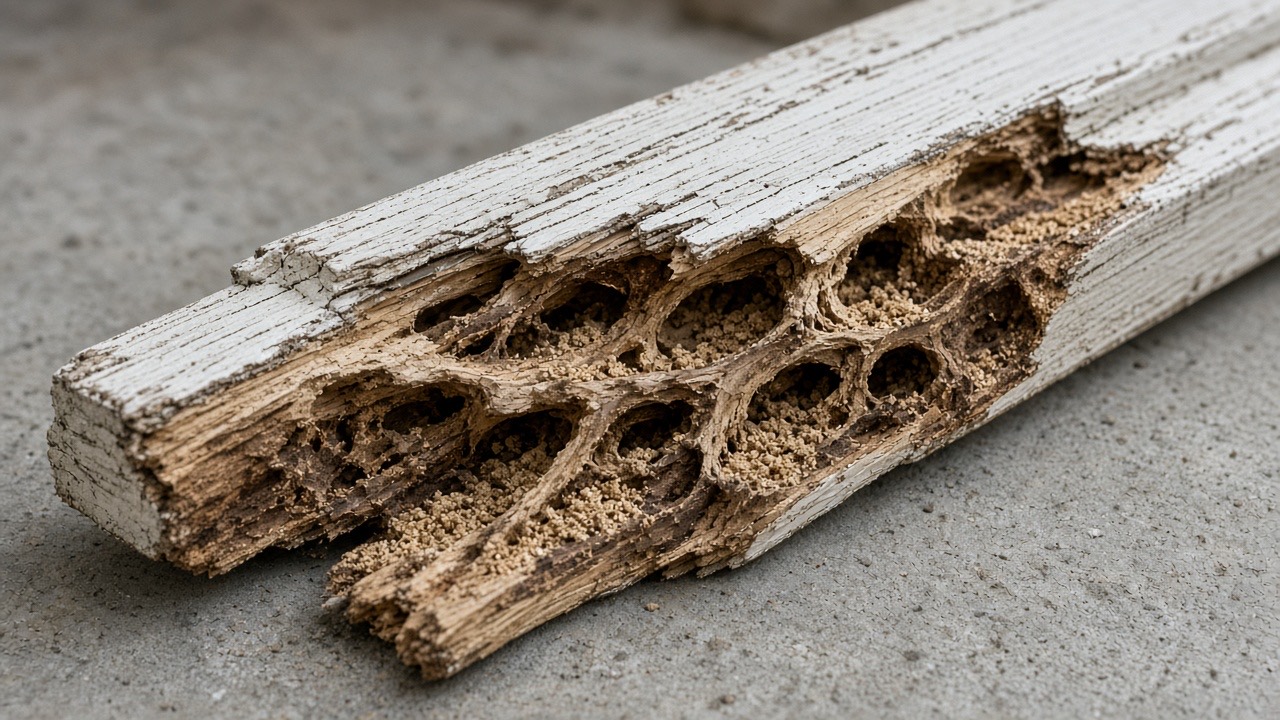
Drywood termites don't live in the soil and travel in. They live entirely inside the wood they eat, often in several separate colonies in one house. A swarm a few years ago may have started colonies in the attic, a window frame, and a piece of furniture, and each one grows independently.
A spot or heat treatment treats the colonies someone found. A whole-structure fumigation treats the colonies nobody found. If you've ever heard someone say "we treated them last year and they came back," a missed colony is the usual reason. We go deeper on this in our tent vs. no-tent termite treatment comparison.
What about cost?
People often assume heat is the cheap option. It isn't always. Heat is equipment- and labor-intensive, and whole-house heat jobs can land in the same range as tenting, or higher. The bigger cost question is whether you'll pay twice if colonies survive.
For a typical single-family home, our tent fumigation estimates usually fall around $2,500–$2,800. That's a typical range, not a fixed price, because size, roof type, and the number of structures all change the number. The tent fumigation cost guide breaks down what drives the price and how our lowest-price guarantee works.
When heat (or a spot treatment) makes sense
We'd rather tell you the truth than sell you a tent. Heat or a localized treatment can be a reasonable choice when:
- The activity is limited to one small, accessible area, like a single door frame or a piece of furniture that can be treated on its own.
- You've had a recent inspection showing no activity anywhere else.
- You need a stop-gap while a full fumigation gets scheduled.
If you're seeing pellets in more than one room, finding discarded wings after a swarm, or the house has never been tented, the odds of hidden colonies go way up. That's when whole-structure fumigation earns its keep.
What to expect if you tent
The biggest worries we hear are about prep and timing, so here's the short version:
- Free survey and quote. Randy looks at the structure, confirms what you're dealing with, and gives you an upfront price.
- Prep. You bag or remove food and medicine, take out plants and pets, and arrange somewhere to stay for a couple of nights. Our fumigation preparation guide walks you through every step, and we offer hands-on prep help.
- Tent, treat, aerate, clear. We handle the tarps, the fumigation, the aeration, and the clearance testing.
- Return home. You go back in once the house tests safe. The job is backed by our 1-year guarantee.
Frequently asked questions
Does heat treatment kill termites?
Yes, if the wood reaches roughly 120°F at its core and stays there long enough. The problem is coverage. Dense beams, wood against concrete block, and insulated framing can stay cooler than the air around them, so termites in those spots can survive a heat treatment that looked successful from the outside.
Is heat treatment safer than tent fumigation?
Both are safe when a licensed crew does them correctly. Heat avoids chemicals but carries a risk of heat damage to belongings and fire-sprinkler heads. Fumigation uses a gas that leaves no residue, and nobody re-enters until clearance testing confirms the air is safe. Neither leaves anything on your furniture or dishes.
Which lasts longer, heat or tenting?
Neither leaves a residual barrier. Both kill the termites present at treatment time. The difference is how many they reach. Fumigation treats the whole structure, so it's less likely to leave a surviving colony that keeps feeding and swarming after you thought the problem was solved.
Can heat treatment be used for subterranean termites?
Not effectively. Subterranean termites live in the soil and travel into the house through mud tubes, so heating the structure doesn't reach the colony. Tent fumigation doesn't treat soil colonies either. Subterranean termites need a soil or bait treatment. Not sure which kind you have? See What Do Florida Termites Look Like?
Heat treatment isn't a scam, and tenting isn't always necessary. The right answer depends on how widespread the drywood termites are and how your house is built. If you're not sure, get the structure looked at by someone who will tell you plainly whether it needs to be tented, and what it will cost if it does.