What Is Fumigation and How Does It Work?
What is fumigation? A plain-English guide to how tenting a house works, what gas is used, how long it takes, and how a fumigator knows it is safe to return.
Think you have termites or bed bugs? Free survey & upfront quote from Randy Riesen.
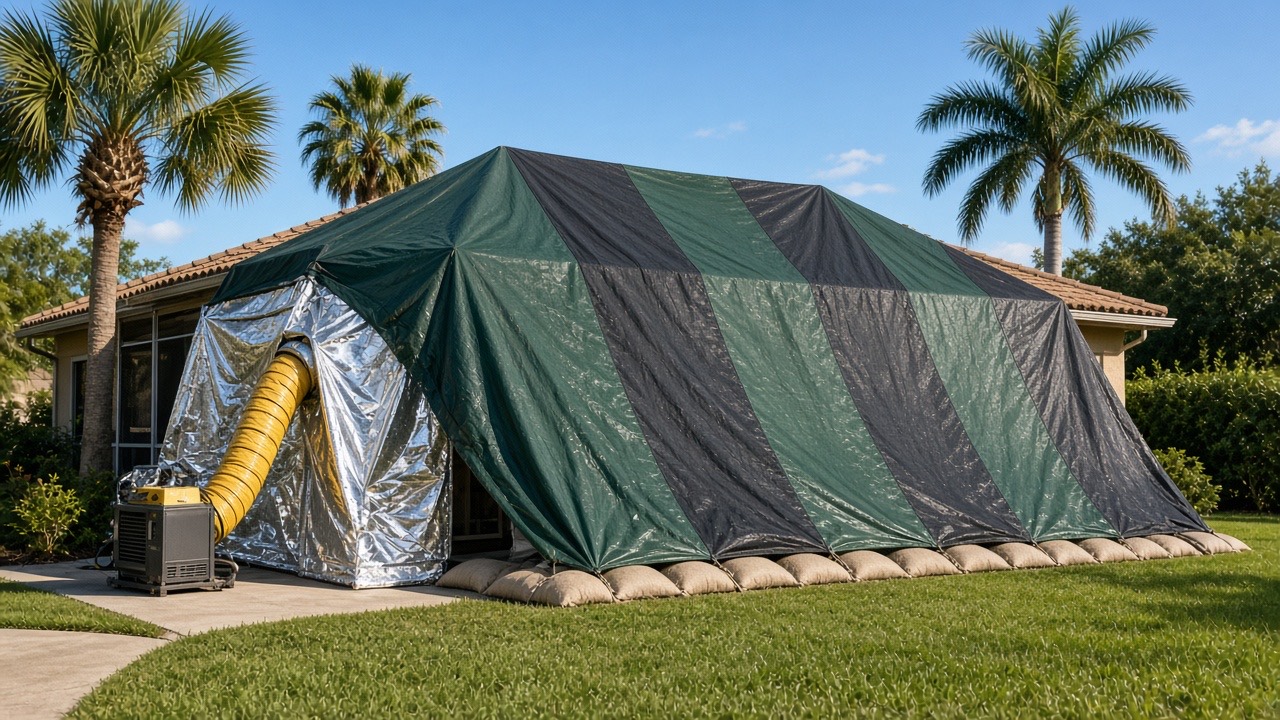
Fumigation is a pest-control method that fills a sealed space with a gas that kills insects throughout the entire space, including inside walls, wood, and furniture. For homes, it usually means tent fumigation: covering the house in tarps, releasing a fumigant gas, holding it for a set time, then airing the house out and testing it before anyone goes back in.
People call it tenting, tarping, or structural fumigation. It's the same process, and it's the only treatment that reaches every part of a building at once. Here's how it works, from the first phone call to the moment you walk back in.
Why fumigate instead of spraying?
Sprays, foams, and baits work where they're applied. That's fine when you know exactly where the pests are. But some pests live where you can't reach them:
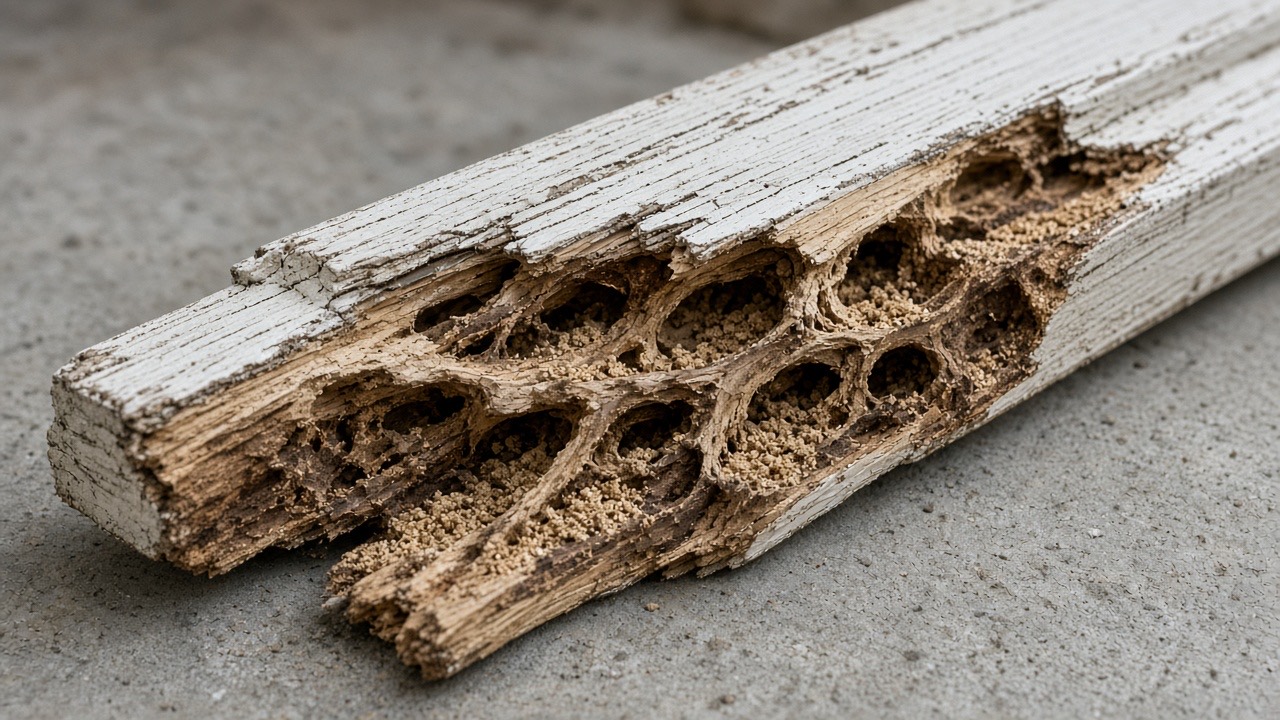
- Drywood termites live entirely inside the wood they eat, in rafters, studs, trim, and furniture. A house often has several separate colonies nobody can see.
- Bed bugs hide in mattress seams, outlets, picture frames, and wall voids, and their eggs survive many surface treatments.
- Severe roach infestations in multi-unit buildings move between units through shared walls and plumbing.
A gas doesn't need to be aimed. It spreads evenly through every cubic foot of the sealed space, so it treats the colonies nobody found along with the ones they did.
What gas is used to fumigate a house?
Most structural fumigation in the United States uses sulfuryl fluoride, sold under brand names like Vikane. It's what we use. A few things make it a good fit for homes:
- It's a true gas, not a mist or fog, so it moves into wood and wall voids instead of settling on surfaces.
- It's colorless and odorless and leaves no residue on furniture, dishes, clothing, or countertops.
- It dissipates completely during aeration, so there's nothing left behind once the house is cleared.
Because sulfuryl fluoride has no smell, fumigators first release a small amount of chloropicrin as a warning agent. It irritates the eyes and nose, so anyone who ignores the warning signs and tries to enter notices right away. It airs out along with the fumigant.
You may also hear about other fumigants. Methyl bromide was common decades ago but has been phased out for most uses. Phosphine is used for stored grain and commodities, not occupied homes.
How does fumigation work, step by step?
1. Survey and quote
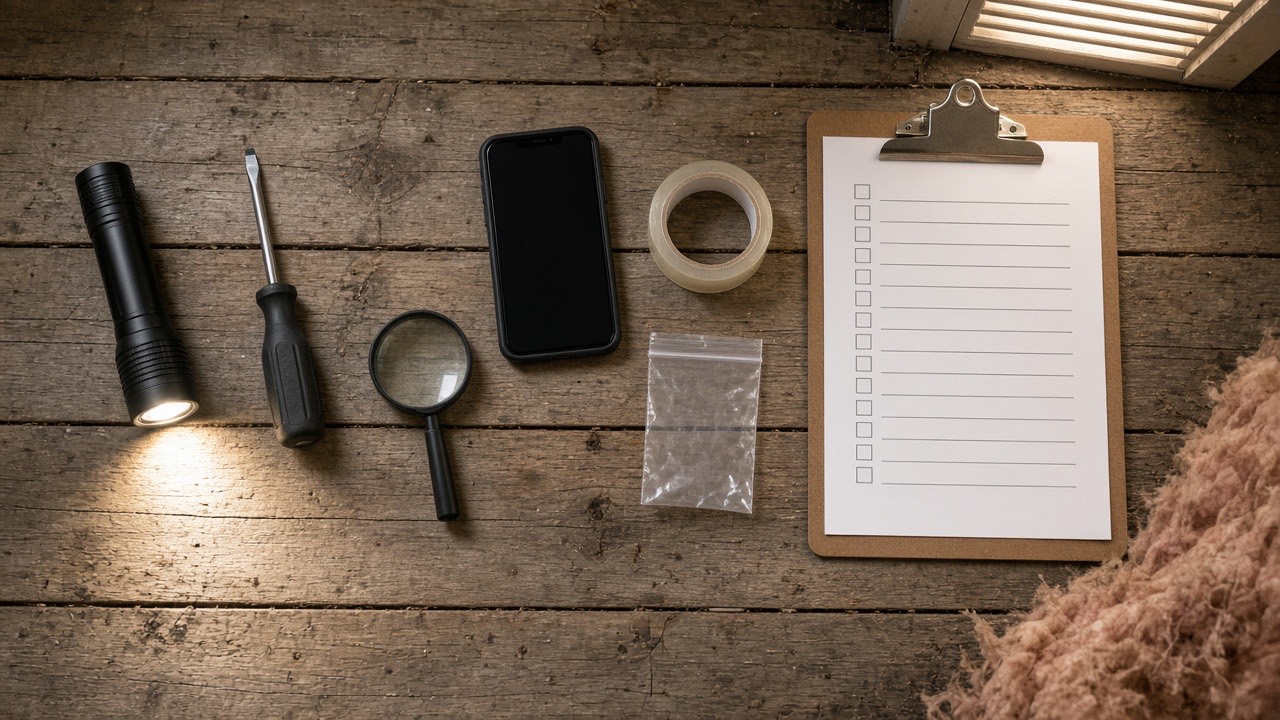
A licensed fumigator inspects the structure, confirms the pest, and measures the building. The volume, in cubic feet, drives how much fumigant the job needs, so it drives the price too. We give you an upfront, written quote. Our tent fumigation cost guide explains what affects the number.
2. Preparation
Before the tent goes up, the house needs a little prep:
- Food, medicine, and anything you'd eat or swallow is either removed or sealed in special fumigation bags.
- People, pets (fish included), and houseplants leave the house.
- Interior doors, cabinets, and drawers are opened so the gas reaches inside.
- The gas utility is arranged so pilot lights are off during treatment.
The tent fumigation preparation guide has the full checklist, and we offer hands-on prep help if you'd rather not do it alone.
3. Tenting and sealing
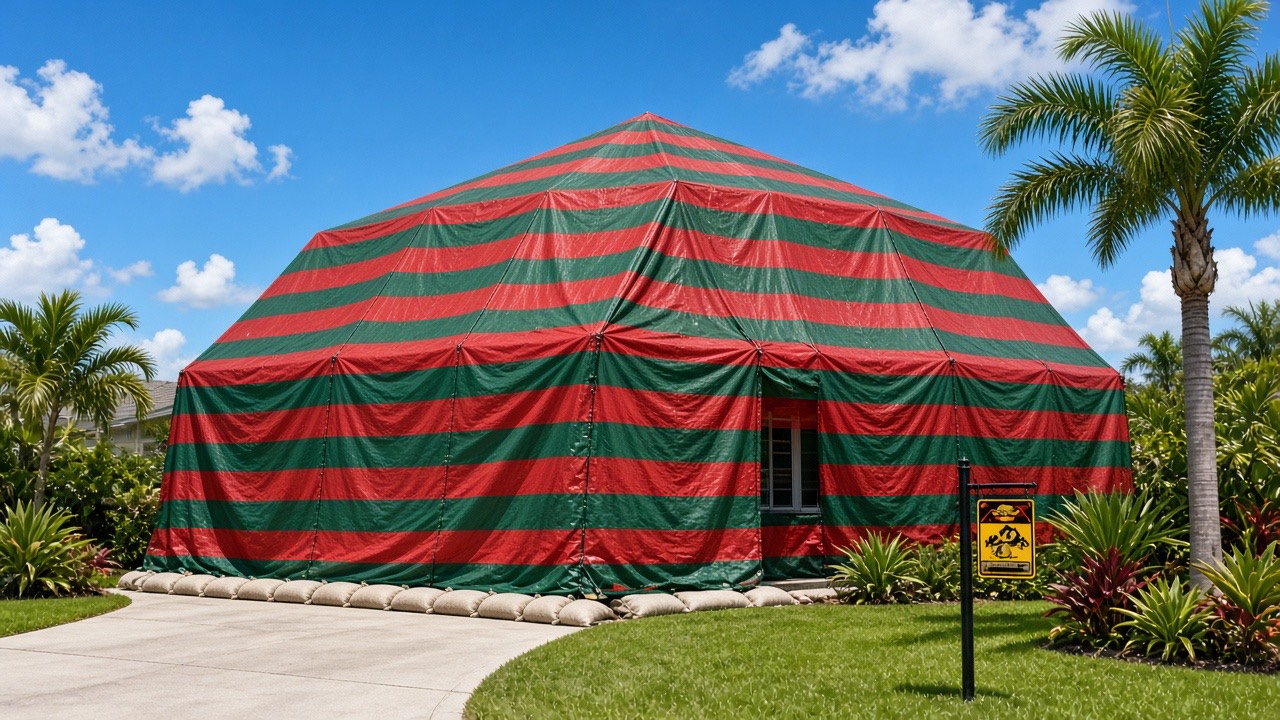
The crew drapes heavy tarps over the whole structure and seals the seams with clamps. Where the tarp meets the ground, they weigh it down with long sand "snakes" to hold the gas in. Every door gets a secondary lock, and warning signs go up on all sides. The tents come in whatever colors the company owns, so pink, yellow, red, and green don't mean different chemicals.
4. Releasing the fumigant
The fumigator calculates the dose from the building's volume, the temperature, the target pest, and the planned exposure time. Eggs are harder to kill than adults, so the dose has to account for every life stage of that pest. The gas is released through hoses into the tented structure, and fans spread it evenly. The fumigator monitors the concentration to make sure it stays in the target range for the full exposure period.
5. Exposure period
The gas stays in the house long enough to reach every gallery and void. For most homes, that's around a day. The structure stays locked and posted the whole time.
6. Aeration
The tarps come off and the house airs out. Fans and open windows move the remaining gas out quickly. Sulfuryl fluoride doesn't cling to surfaces, so once it's out of the air, it's out of the house.
7. Clearance testing
This is the step that matters most for your peace of mind. A licensed fumigator uses specialized equipment to test the air in the living spaces. Nobody re-occupies the house until readings confirm it's at or below the safe re-entry level on the fumigant label.
8. You come home
You get the all-clear and move back in. There's no wiping down counters or re-washing dishes, because the gas leaves no residue. Our fumigations come with a 1-year guarantee.
How long does fumigation take?
Plan on being out of the house for 24–72 hours for most homes. The whole process, including prep, tenting, exposure, aeration, and clearance, typically runs 2–3 days. Larger buildings, unusual construction, and commercial properties can take longer. We give you an exact timeline before the job so you can book a hotel or line up a place to stay.
Is fumigation safe?
Yes, when it's done by a licensed fumigator who follows the label and the law. In Florida, structural fumigation is regulated by the Florida Department of Agriculture and Consumer Services (DACS), and a certified operator has to be in charge of every job. The safety comes from the process:
- Nobody is inside during treatment.
- Doors are double-locked and the site is posted with warning signs.
- The warning agent makes any accidental entry immediately unpleasant.
- The house is aerated and tested before anyone goes back in.
- The gas leaves no residue on your belongings.
It's normal to feel nervous about leaving your home under a tent. Ask your fumigator to walk you through each of these steps. A good one will be happy to.
What fumigation does and doesn't do
Fumigation kills the pests inside the structure at the time of treatment. It doesn't leave a protective barrier behind. That's why the guarantee matters, and why it helps to understand where your termites came from in the first place.
Fumigation also isn't the right tool for every termite problem. Subterranean termites live in the soil, and tenting doesn't treat the colony underground. Those need a soil or bait treatment. Drywood termites, which live in the wood itself, are what tent fumigation is built for. If you're weighing tenting against other options, read our honest comparison of heat treatment vs. tent fumigation.
Frequently asked questions
What does it mean to tent a house?
Tenting a house means covering the entire structure with heavy tarps so it can be fumigated. The tarps trap the fumigant gas inside long enough to reach every part of the building, including walls, attic, and furniture. Tenting and tent fumigation are the same thing.
Do I need to wash everything after fumigation?
No. Sulfuryl fluoride is a gas that leaves no residue on dishes, clothing, bedding, or furniture. You only need to bag or remove food, medicine, and other things you'd swallow before treatment. Once the house passes clearance testing, you can move right back in.
Does fumigation kill termite eggs?
A properly dosed fumigation is designed to kill every life stage of the target pest. Eggs need a higher dose than adults, so the fumigator calculates the dose for the specific pest, temperature, and exposure time. Underdosing to save money is one reason cheap fumigations sometimes fail.
What pests does tent fumigation treat?
Structural fumigation is mainly used for drywood termites and bed bugs, plus wood-boring beetles and severe infestations of other pests that hide in wall voids. We use it for drywood termites, bed bugs, and commercial and multi-unit buildings.
Fumigation sounds intimidating until you see how controlled it is. The house is sealed, the gas is measured, and nobody goes back in until a test says it's safe. If you think you need it, the first step is a free survey so you know exactly what you're dealing with before you commit to anything.